Sacred Vedic Arts
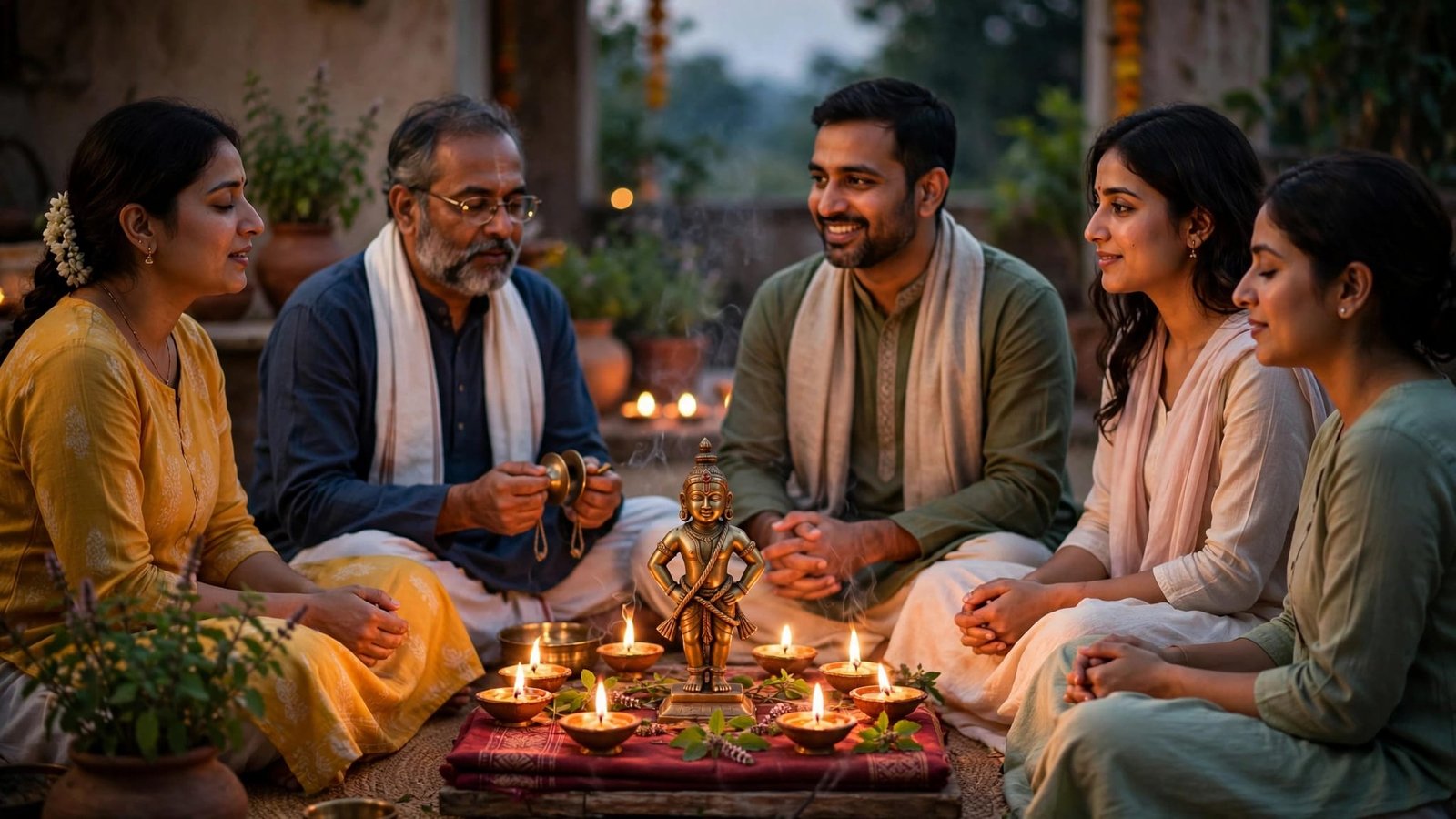
This Kartik evening brings together kirtan, remembrance of saintly teachers, and ghee-lamp offerings to Damodara. There’s laughter in the room, too, and a warm welcome for a visitor who doesn’t know the songs or names.
You aren’t expected to understand everything before joining in. The invitation is to share the devotional gathering, beginning with singing before settling into the evening’s class.
Key Takeaways
- Newcomers can join the kirtan without knowing every word. English translations explain the lyrics, and listening is welcome.
- The gathering remembers saints’ appearance and disappearance days with gratitude for their continuing presence and blessings.
- Dhananjaya Pandit’s pilgrimage shows his dependence on the Lord, while his care for Tulsi and deity worship reflects his devotion in daily responsibilities.
- Gadadhar Das’s stories show his devotional absorption, including his joyful response when a local official said Krishna’s name.
- During Kartik, the gathering offers a ghee lamp to Damodara and also worships Krishna with Radha on the altar.
Joining the Kirtan Without Knowing Every Word
The opening moves through prayers, devotional songs, and chanting the Hare Krishna mantra. There are instruments, ringing bells, and little exchanges about who might lead next.
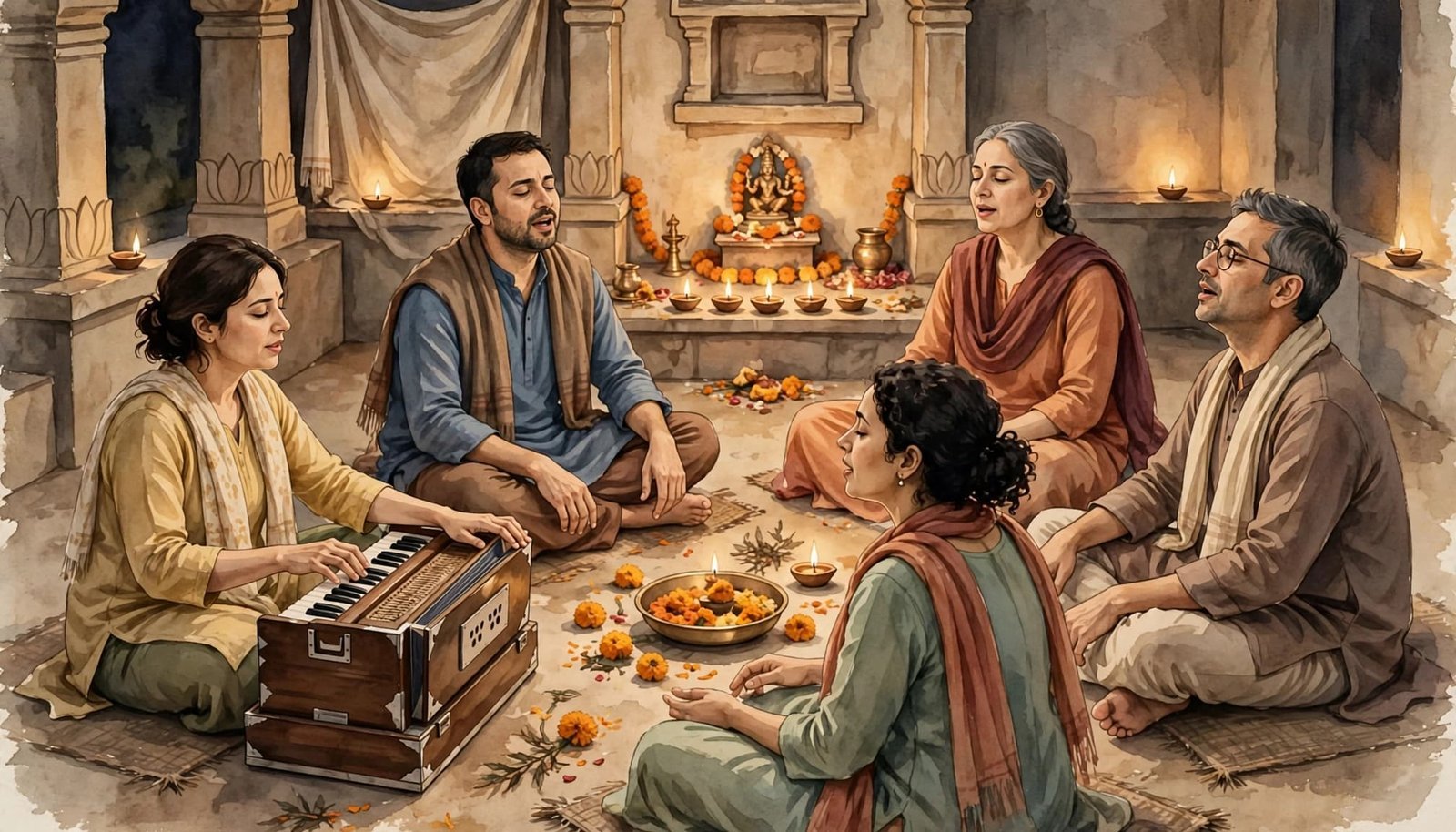
Someone admits they haven’t played harmonium for a while. Another person doesn’t want to throw the melody off. That easy, human warmth stays alongside the prayers.
For the newcomer, the reassurance is simple: unfamiliar names and songs don’t put anyone outside the circle. Later, the teacher points out that the English translations in the songbook explain the lyrics being sung. Following every Sanskrit or Bengali word isn’t a requirement.
This is the welcoming spirit familiar in our kirtan offerings: there’s room to listen while the words become familiar.
Why We Remember Saints’ Appearance and Disappearance
The conversation turns to a practice that can sound unfamiliar at first: celebrating both the appearance and disappearance days of spiritual teachers. Srinivasa Acharya, Dhananjaya Pandit, and Gadadhar Das are remembered during the gathering, alongside the Gopastami observance.
The teacher explains that self-realized souls aren’t limited to their visible physical bodies. Their presence and blessings continue even when we can no longer see them.
She offers an ordinary image: someone passes into view through a window, then moves beyond it. Their disappearance from sight doesn’t mean they’ve stopped existing.
That understanding gives these observances a different feeling from an ordinary anniversary of loss. There can be longing and grief, but also gratitude for the teacher’s continuing presence.
Hearing about their qualities is itself part of devotional practice. We remember their service and pray for a closer connection with them.
Before the Class, a Prayer to Become a Vehicle
Before speaking, the presenter offers obeisances to the spiritual teachers in the disciplic succession. He explains that these prayers ask for their presence and help, both for the speaker and for everyone listening.
Then he recalls a song about giving up the conviction that we are the independent controller and doer. The prayer is to stop relying only on personal strength and will, and instead become a vehicle for divine will.
There’s humility in the way he approaches the class, too. He knows that a visitor has little context for the names and teachings, so he promises to make them as accessible as he can.
The welcome extends beyond philosophy. When the visitor describes being between jobs and uncertain about the next step, the response is affectionate: there is friendship, companionship, and family here.
Dhananjaya Pandit’s Dependence on the Lord
Dhananjaya Pandit is described as an intimate associate of Nityananda. The class also explains the tradition’s understanding that Chaitanya’s eternal associates have identities within Krishna’s pastimes. Dhananjaya is identified with Vasudama, one of Krishna’s principal cowherd friends.
His pilgrimage story gives a concrete picture of dependence on the Lord. Although his wealthy father supplied travel money, Dhananjaya offered it to the Lord and continued with only a begging bowl.
The teacher pauses over that choice. He willingly gave up the security he could have carried with him and placed his trust in divine care.
His devotion also appeared in ordinary responsibilities. He offered obeisances before Tulsi, the sacred plant honored in bhakti practice. And when he traveled, he arranged for a disciple to continue the deity worship.
The point is practical and tender: going elsewhere didn’t mean abandoning the service already entrusted to him.
Gadadhar Das and the Joy of Devotional Absorption
Gadadhar Das is introduced as an associate of both Lord Chaitanya and Nityananda. The discussion distinguishes him from Gadadhar Pandit and describes his spiritual identity in relation to Srimati Radharani’s radiance and opulence.
“Who Will Buy Yogurt?”
While absorbed in the mood of a gopi, a cowherd maiden, Gadadhar Das would call out, “Who will buy yogurt?” At another point, he carried Ganges water while calling out as though selling milk.
These stories belong to a wider account of Nityananda’s companions expressing the moods of Krishna’s pastimes. Some called as cowherd boys tending cattle; others displayed different forms of devotional absorption.
Yet the teacher makes an important distinction about Gadadhar Das: his mood was internal. The commentary discussed in class says he had no need to dress up or create an outward show of it.
The Official Who Had Already Said Krishna’s Name
Another story brings a little joyful cleverness.
Gadadhar Das entered the home of a local Muslim official who opposed the congregational chanting. He urged the official to chant Krishna’s name, explaining that Chaitanya and Nityananda had come to share the holy names with everyone.
The official initially became angry. Then, seeing Gadadhar’s absorbed state, he softened and said he would chant Krishna’s names tomorrow.
Gadadhar immediately rejoiced. By saying that, the official had already spoken Krishna’s name.
The exchange ends in celebration rather than argument. Gadadhar hears the holy name and responds with delight, while the teacher draws attention to the strength of his devotion.
Offering Ghee Lamps to Damodara
After the class, the gathering returns to worship and song. Kartik is also called the month of Damodara, and the teacher explains the lamp offering before everyone takes part.
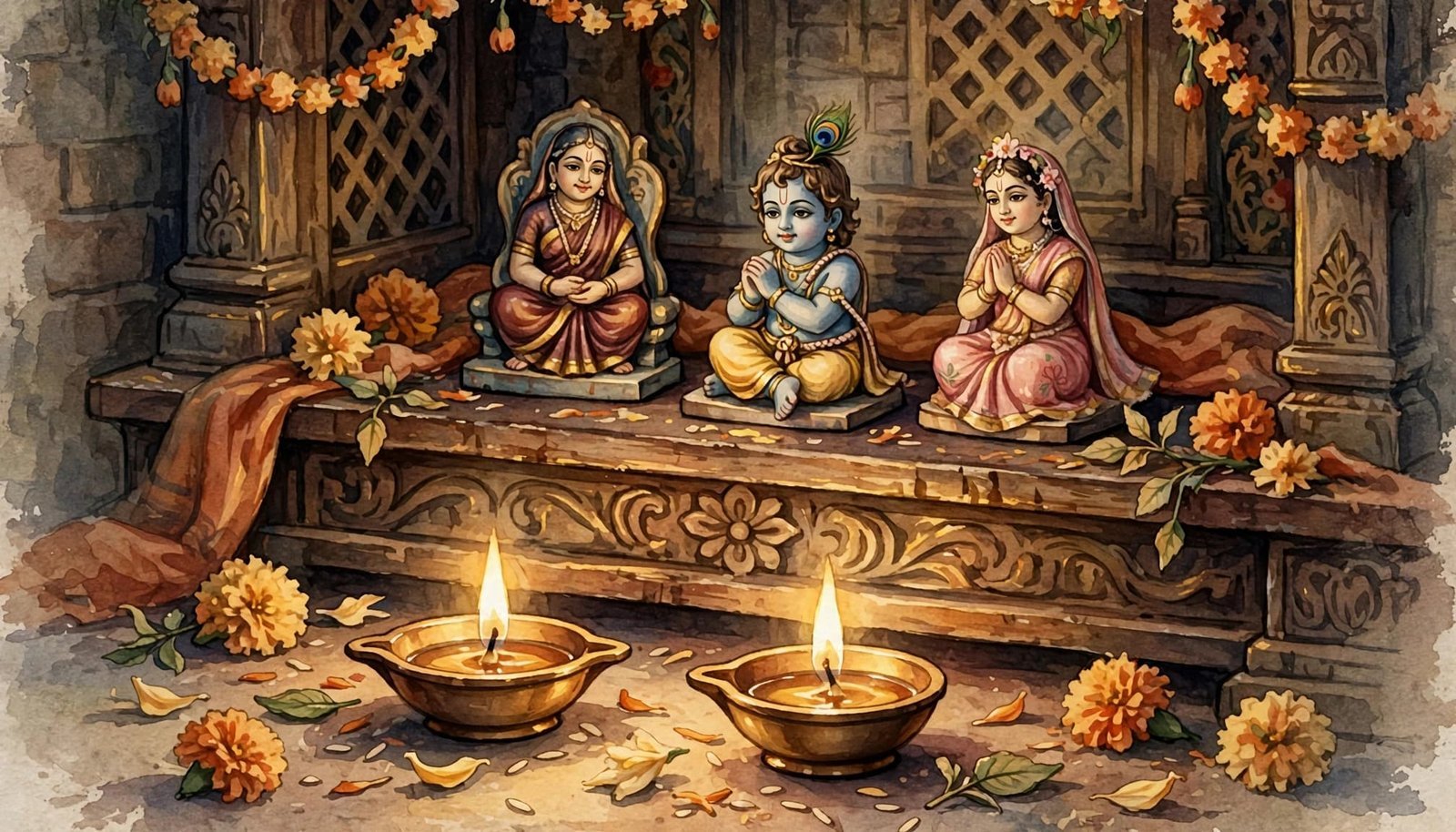
The offering is made to Damodara shown with his mother, and also to Krishna with Radha on the altar. A small flame fueled by ghee is offered, then the lamp is placed down before the altar.
The explanation is straightforward, with care for the person encountering it for the first time. Singing and bells accompany the worship, and the evening continues in sacred sound.
Frequently Asked Questions
Can someone join the kirtan without knowing the songs?
Yes. The gathering welcomes people who don’t know the songs or names, and the songbook includes English translations. Listening while the words become familiar is welcome, too.
Why does the gathering remember saints’ disappearance days?
The teacher explains that self-realized souls aren’t limited to their visible physical bodies. Their presence and blessings continue after they can no longer be seen.
What did Dhananjaya Pandit do on his pilgrimage?
He offered the travel money his wealthy father had given him to the Lord and continued with only a begging bowl. When he traveled, he also arranged for a disciple to continue the deity worship.
How did Gadadhar Das respond when the official said he would chant Krishna’s name?
The official said he would chant the next day, and Gadadhar rejoiced because the man had already spoken Krishna’s name. The story shows Gadadhar’s delight in hearing the holy name.
What happens during the Kartik lamp offering?
A small flame fueled by ghee is offered to Damodara with his mother and to Krishna with Radha on the altar. Singing and bells accompany the worship, and the lamp is placed before the altar.
A Gathering With Room to Join
The evening holds reverence and laughter together. Unfamiliar words receive patient explanations, and stories of devotion sit beside friendly exchanges about instruments, melodies, and life’s uncertain moments.
The invitation to participate remains open throughout. The gathering begins with song and closes with lamps and more singing, with room for the newcomer all along.

TLTRExcerpt
TLTR
Excerpt
Hear stories of Dhananjaya Pandit and Gadadhar Das, join Hare Krishna kirtan, and learn about the Kartik lamp offering to Damodara.
Recent Posts
Kirtan Night: Chanting and a Kartik Lamp Offering
Give Miami Day Kirtanathon: Sacred Sound and Shared Devotion
Damodara: Longing for Devotion Beyond Outward Practice
Kartik Evening: Kirtan, Saintly Teachers, and Lamps
Kamyavan Pilgrimage: Krishna’s Pastimes in Braj
Categories
Share
Recent Posts