Pilgrimage
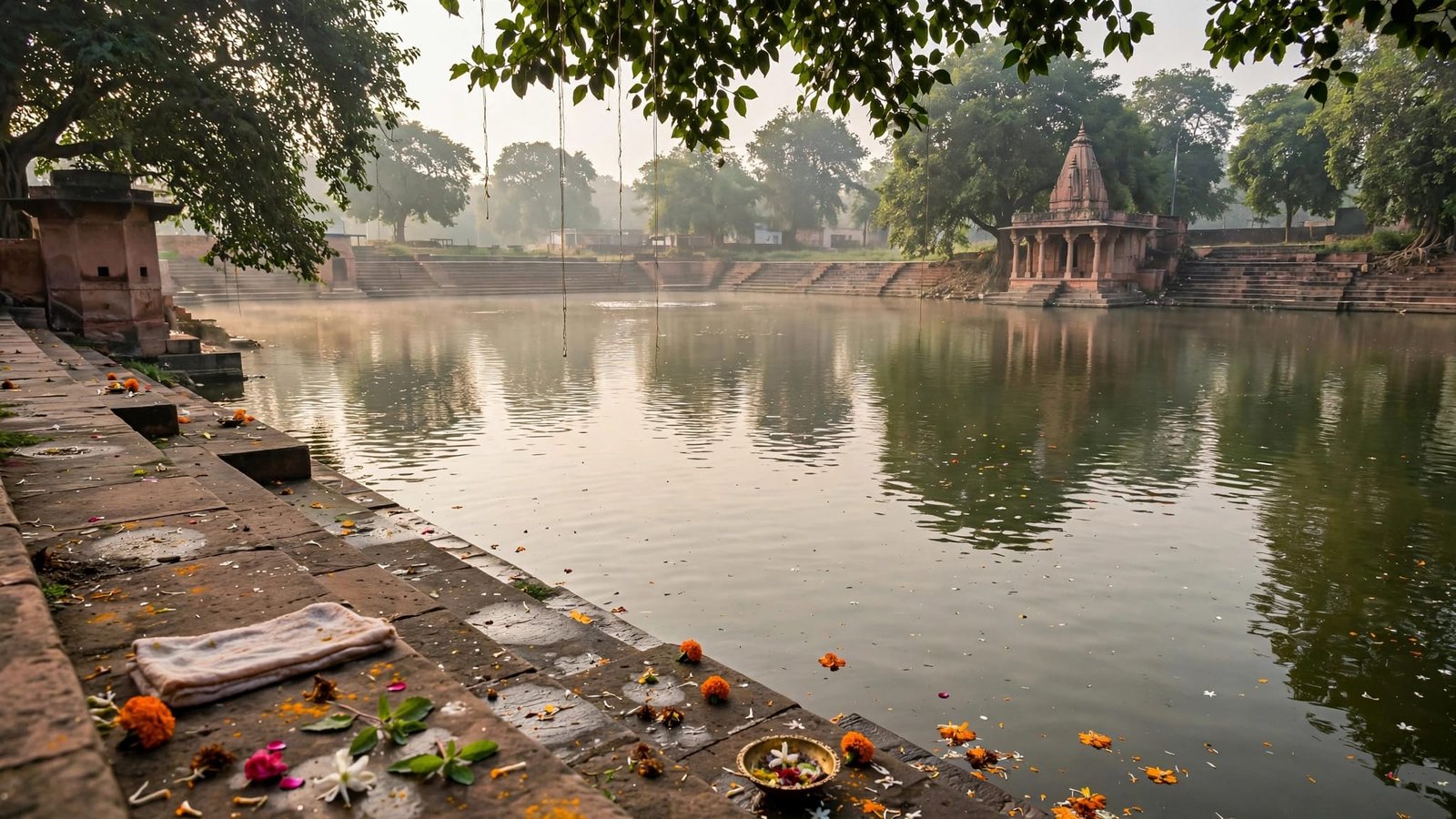
The ponds, caves, and hills of Kamyavan (काम्यवन) hold memories of Krishna eating, playing, and meeting his beloved companions. This Kartik gathering begins with devotional chanting of the holy names before we travel through these places in remembrance.
Along the way, we offer obeisances and take the sacred dust upon our heads, eyes, tongues, and hearts. Our journey toward Kamyavan pauses first at Dig.
Key Takeaways
- Kamyavan is the fourth of Braj’s twelve forests. Its roughly fourteen-mile circumambulation begins at Bimalkund and passes ponds, wells, hills, and temples.
- The pilgrimage recalls Krishna’s pastimes at places such as Bhojan Tali, Vomasura’s cave, Pishalini Shila, and Looki Kund.
- The article distinguishes the gopis’ selfless love for Krishna from worldly desire, which it describes as a reflection of transcendental attraction.
- Bimalkund has two accounts of its origin, while Dharmakund recalls Yudhishthira answering the Yaksha’s questions about dharma and human life.
Dig and Adi Badri: Places of Welcome
Nanda Baba and his party camped at Dig while moving from Chhattikara toward Kamyavan, before eventually settling in Nandagram. Dig’s name recalls Krishna loosening Srimati Radhika’s patience and bashfulness through his beauty and the sweetness of his flute.
We remember Lakshman’s residence here, along with the Lakshman temple, Sakshi Gopal temple, and Rup Sagar. Then we continue to Adi Badri.
When Nanda Baba and the cowherd community wished to visit Badrinath in the Himalayas, Krishna brought them here instead. The understanding is that the original holy places reside in Braj.
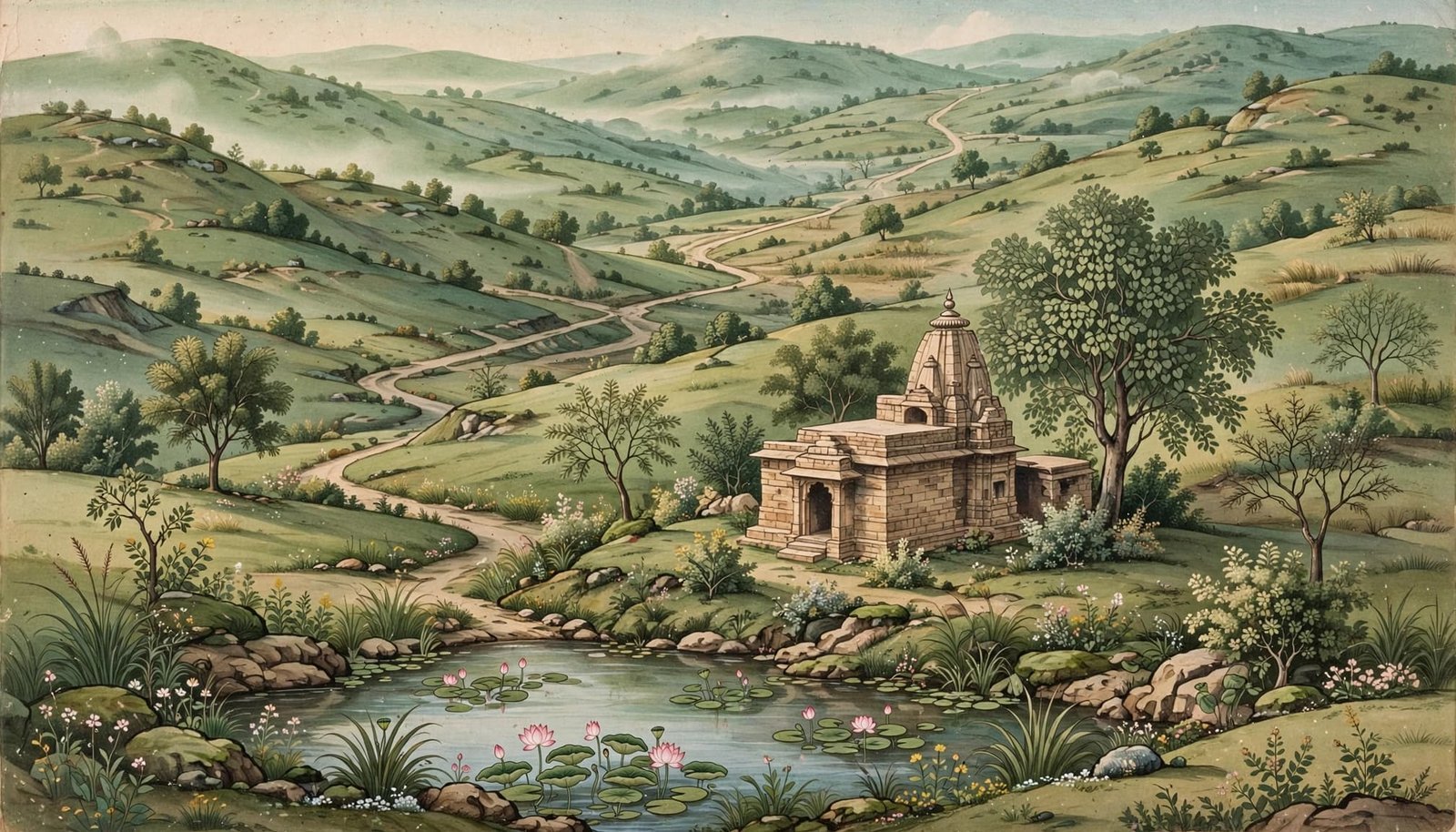
Near green Gandhamadan Hill, we remember Nara-Narayana Rishi. When Indra sent heavenly dancers to disturb their austerities, Narayana manifested still more beautiful dancers, including Urvashi. Indra’s pride fell away. The reflection comes close to home: pride can leave us feeling empty, even when nothing outwardly happens.
Lunch and Musical Stones at Bhojan Tali
At Bhojan Tali, Krishna ate with his cowherd friends. Nearby Kshir Sagar means “ocean of milk,” prompting remembrance of Kshirodakashayi Vishnu, the Supersoul within everyone’s heart.
The pilgrimage account identifies impressions of plates and cups on the hill, along with Krishna’s sitting place. After lunch, the boys played on another hill and used a stone as a musical instrument. Sweet sounds can still be produced there.
We also pause at Sri Gopinath’s temple. Amid the offerings comes a cheerful reminder: everyone brings something.
Vomasura’s Cave and the Missing Cowherd Boys
Near Vomasura’s cave, also associated with Medhavi Muni’s worship, lies Baladeva’s footprint. He pressed down with his foot to steady the earth.
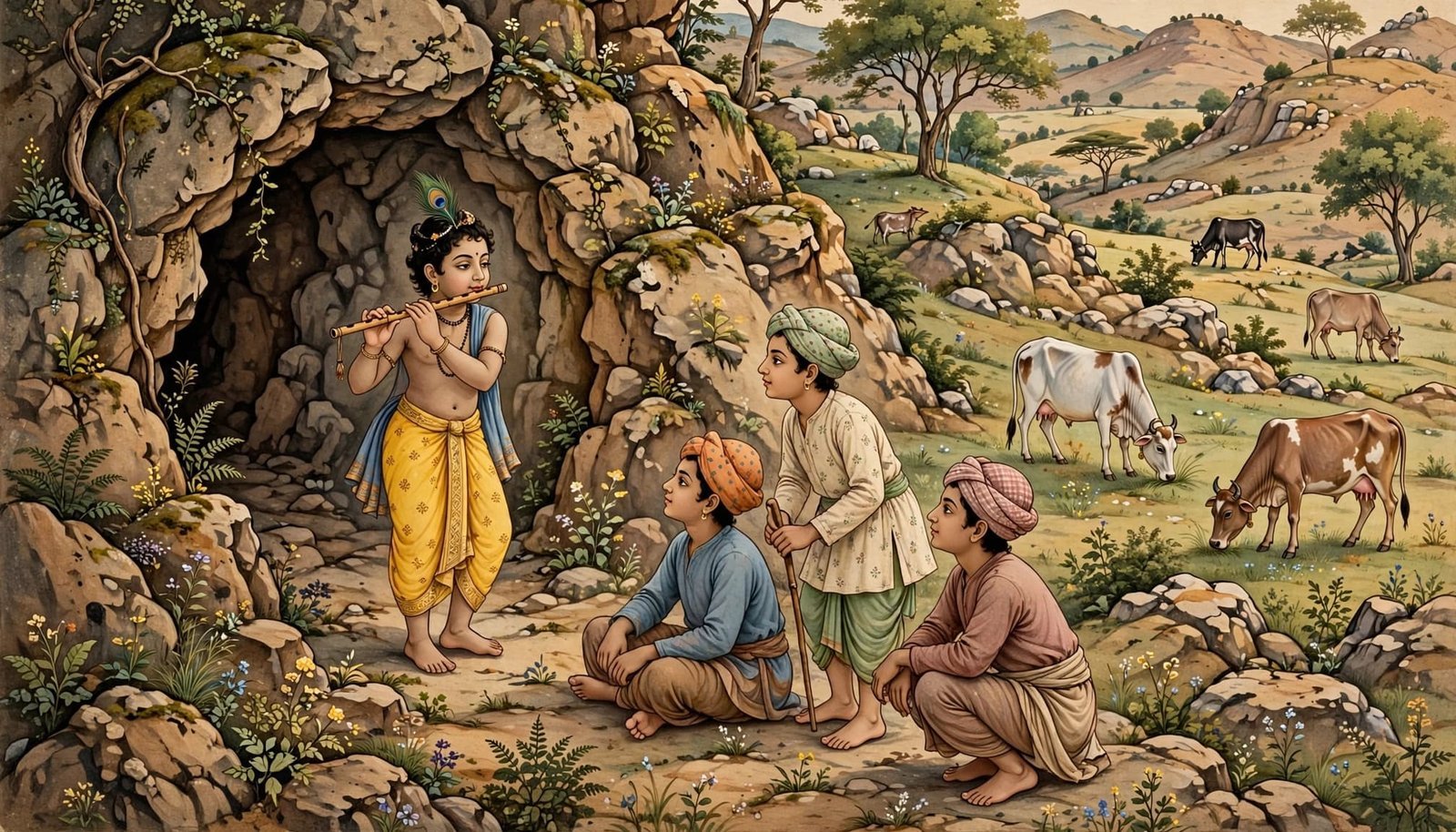
While the cows grazed, Krishna’s friends played thieves and sheep-keepers. Some became sheep, others their owners, and Krishna acted as judge.
Vomasura, Kamsa’s spy, disguised himself as a cowherd boy and joined the thieves. Then he carried the boys playing sheep into the cave. Krishna recognized him, killed him, and freed his friends.
This pastime appears in the Tenth Canto of the Srimad Bhagavatam and in Krishna Book.
A Stone Slide and Footprints in Melted Rock
At Pishalini Shila, on Indrasena Hill near Kalabati village, Krishna and his friends enjoyed a stone slide. Radhika and her companions also slid here. Village boys and pilgrims continue to enjoy the place.
Next comes Looki Kund, associated with water play and hide-and-seek. Krishna left his cowherd friends to meet the gopis, then hid in Looki Kandara, a nearby cave.
Unable to find him, the gopis became anxious and meditated on him. Their place of meditation is Dhyan Kund.
Krishna eventually appeared above the cave and played his flute. Its sweetness melted the hill, leaving his footprints in the stone. Nearby impressions recall the cowherd boys’ feet and the calves’ hooves.
The Desire at Kamyavan’s Heart
Kamyavan (काम्यवन) is the fourth of Braj’s twelve forests. Its roughly fourteen-mile circumambulation passes ponds, wells, flowering creepers, fruit trees, and birds. Pilgrims begin at Bimalkund. For a longer route, plan time for other sites (अन्य साइटें), including Kadamkhandi and Shri Kund Baithak.
Here, kama, or desire, opens into a distinction. Krishna is the original transcendental Cupid, while worldly desires are distorted reflections of that original attraction.
The gopis’ love seeks Krishna’s happiness without a trace of personal enjoyment. Scripture calls this love kama, although its purpose is wholly different from worldly lust.
Bimalkund’s Two Sacred Accounts
The princesses’ tears of happiness
The Garga Samhita account recalls King Bimal’s daughters, who had previously been women of Janakpuri longing for Rama. He promised to fulfill their desire when he appeared as Krishna.
Following the sage Yajnavalkya’s counsel, the king sent an emissary toward Mathura. Bhishma redirected him to Vrindavan.
Krishna accepted the invitation and brought the princesses to Kamyavan. Taking a form for each, he fulfilled their longing through rasa and other pastimes. Their joyful tears filled Bimalkund.
Bimla Devi appears from the water
Another account concerns Pushkar, which failed to join the holy places visiting Braj during Chaturmasya.
Krishna remembered Yogamaya, and water sprang from the earth. A beautiful girl appeared within that current and pleased him through loving service. He named her Bimla Devi and gave the kund her name.
Bathing here is praised for purifying the heart and awakening Braj devotion. Sages, including Durvasa, and the Pandavas also stayed beside its waters.
Vrinda Devi and Kamyavan’s Temples
At the temple of Vrinda Devi and Govinda Dev, we remember how Braj’s deities traveled toward Jaipur during Aurangzeb’s attacks on temples. Their attendants continued daily worship wherever they stopped.
Temples later arose at these stopping places, with representative forms of the original deities. Vrinda Devi, however, would go no farther than Kamyavan.
She presides over Vrindavan’s groves and arranges the setting for Radha and Krishna’s meetings: the birds, peacocks, blossoms, and necessities of their play. Like a conductor, she brings everything together.
The discussion also recalls Mahaprabhu’s identification of Vrindavan near Mathura, distinguishing it from Kamyavan’s own sacred places.
For a wider itinerary, check these additional मंदिर stops and confirm current access and routing locally:
- Shri Hari Kripa Ashram
- Swami Hari Chaitanya Puri Ji Maharaj
- Sri Bimal Goudiya Math Mandir
- Guru Peer Niranjan Das Ji Kirane Wale Samadhi
- Lord Parshuram Temple
- Radha Madhav Temple
- Saptampith Shree Ghanshyamji Pushtimarg Haveli
- Panchampeeth Shri Gokulchandramaji Mandir
- Vimal Bihari Ji Temple
- Panchmukhi Mahadev Mandir
Dharmakund and Yudhishthira’s Test
At Dharmakund, we remember the Pandavas’ exile: twelve years in the forest, followed by one year concealed.
When Draupadi and the brothers grew thirsty, Bhima went looking for water. At a lake, a Yaksha warned him to answer questions before drinking. Bhima ignored him and fell unconscious. Arjuna, Nakula, and Sahadeva met the same fate.
Yudhishthira listened. His answers give the conversation its searching turn.
| The Yaksha’s question | Yudhishthira’s answer |
|---|---|
| What moves faster than wind? | The mind. |
| What is the best religious conduct? | Mercy. |
| What is true tolerance? | Enduring life’s opposing conditions. |
| What is humanity’s enemy? | Anger. |
| What is an endless disease? | Greed. |
| What is the greatest wonder? | We see others die yet expect to live forever. |
| What is the true path? | The path followed by great souls. |
Argument alone cannot settle dharma; scriptures and sages express many views. The gathering pauses over the path followed by great souls.
Frequently Asked Questions
What is Kamyavan?
Kamyavan is the fourth of Braj’s twelve forests. Its roughly fourteen-mile circumambulation passes ponds, wells, flowering creepers, fruit trees, and sites associated with Krishna’s pastimes.
What happened at Vomasura’s cave?
Vomasura disguised himself as a cowherd boy and carried the boys who were playing sheep into the cave. Krishna recognized him, killed him, and freed his friends.
Why is Bimalkund sacred?
One account says the joyful tears of King Bimal’s daughters filled the kund after Krishna fulfilled their longing. Another says Krishna called Yogamaya, and Bimla Devi appeared from water that sprang from the earth.
Who is Vrinda Devi?
Vrinda Devi presides over Vrindavan’s groves and arranges the setting for Radha and Krishna’s meetings. The article recalls that she went no farther than Kamyavan when Braj’s deities traveled toward Jaipur.
What did Yudhishthira answer at Dharmakund?
Yudhishthira answered the Yaksha’s questions about topics including the mind, mercy, anger, greed, and the path followed by great souls. The gathering’s account emphasizes that last answer as a reflection on dharma.

TLTRExcerpt
TLTR
Excerpt
Explore Kamyavan, Braj’s fourth forest, on a sacred pilgrimage through Bimalkund, Krishna’s pastime sites, ancient temples, and Dharmakund.
Recent Posts
Kirtan Night: Chanting and a Kartik Lamp Offering
Give Miami Day Kirtanathon: Sacred Sound and Shared Devotion
Damodara: Longing for Devotion Beyond Outward Practice
Kamyavan Pilgrimage: Krishna’s Pastimes in Braj
Remembering Srila Prabhupada at Sunday Love Feast
Categories
Share
Recent Posts