Pilgrimage
This Virtual Vraja-mandala Parikrama brings sacred places within reach through hearing and remembrance, even while we’re gathered in Miami. As we follow the pastimes of Radha and Krishna, Vraja-mandala Parikrama becomes a listening-based pilgrimage through Vraja and Mathura. In this morning gathering with Bhakta Bandhav Rasikananda Swami, we hear about these pastimes.
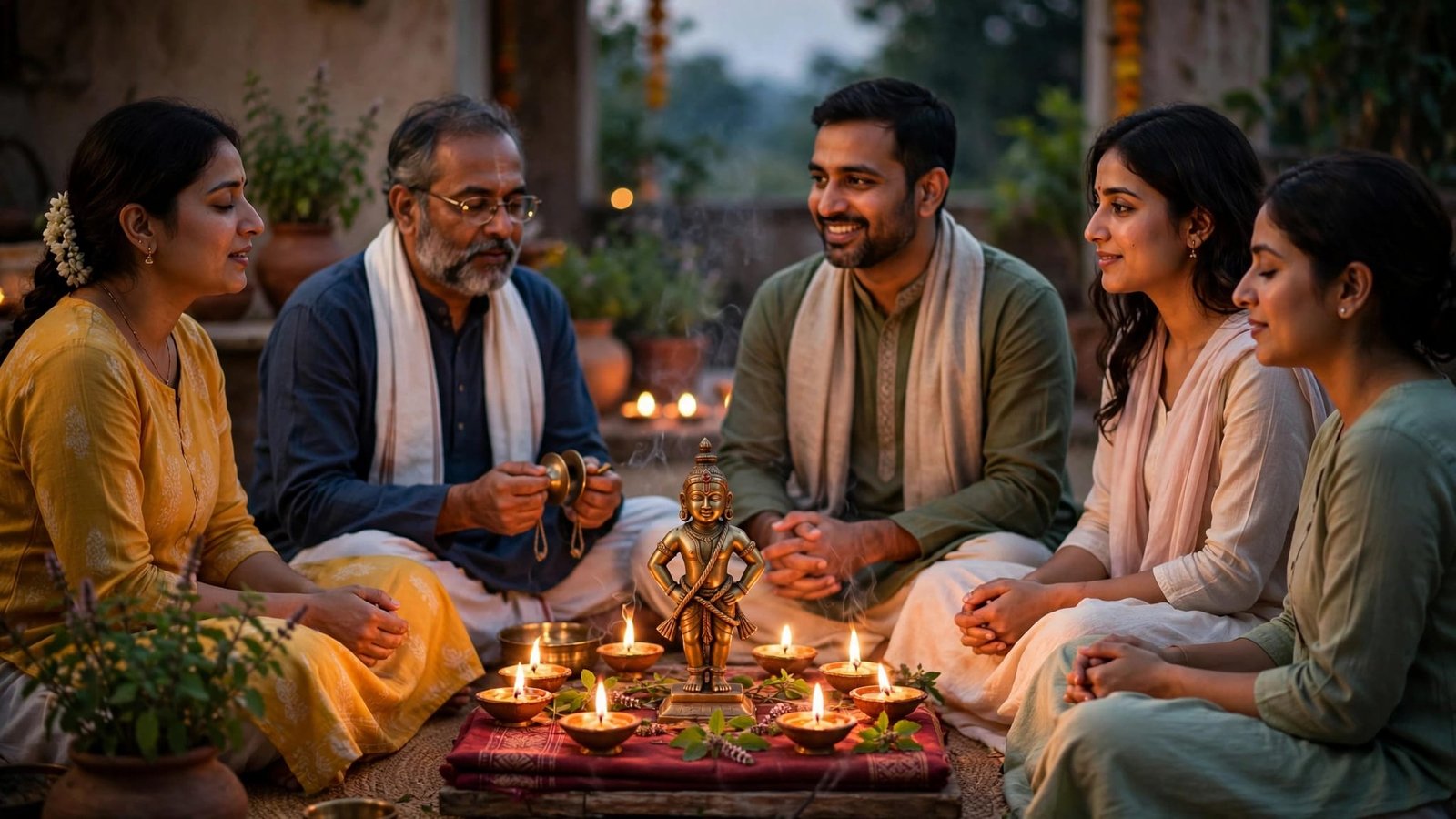
The morning begins with harmonium, kartals, bells, and shared singing. After finding songbook pages and working out melodies together, the devotees offer prayers and turn to the meaning of the lamp offered to Damodar. Hearing and chanting are also familiar practices in communities shaped by Srila Prabhupada’s teachings.
Key Takeaways
- Vraja-mandala Parikrama is a listening-based pilgrimage through Vraja and Mathura. Hearing and remembering Krishna’s pastimes can bring these sacred places close, even from a distance.
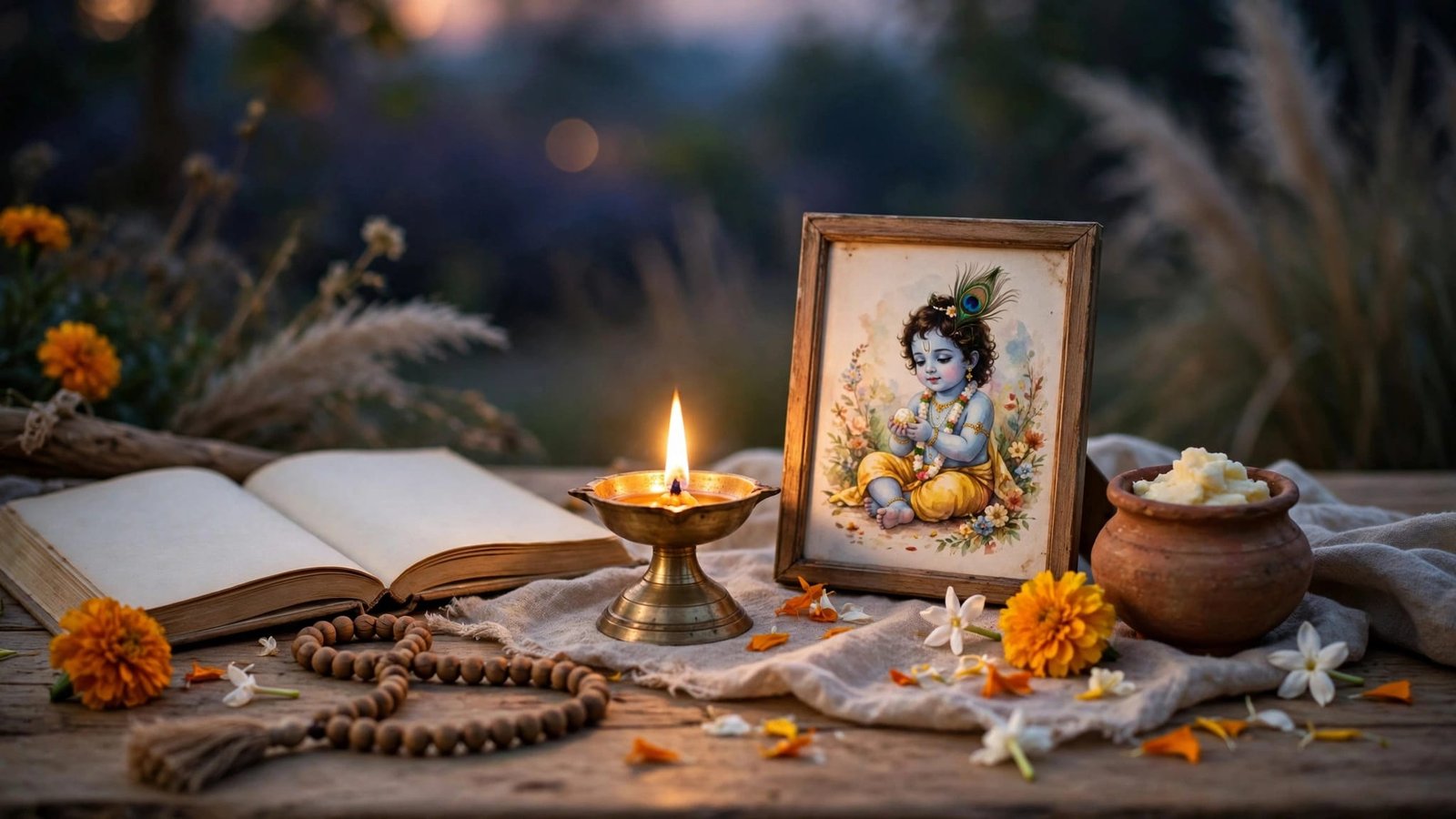
- During Kartik, devotees offer lamps to Damodar. The discussion connects the light to Radhika’s mercy and explains why ghee is preferred for the offering.
- The parikrama shares pastimes from places such as Bhandirvan, Matvan, and Nidhuvan, along with accounts of deities and saints who served in Vrindavan.
- The article emphasizes attention in remembrance: hearing the pastimes with affection can make the Dhama feel near, even when a devotee is far away.
Why devotees offer lamps to Damodar
Krishna is compared to sunshine and maya, illusion, to darkness. When sunlight appears, darkness disappears. The discussion then turns toward Shrimati Radhika, his internal potency, as the source of the light, life, and warmth the sun shares with us.
During Kartik, devotees commonly offer lamps to Damodar. The practice carries an intimate meaning: devotees offer light that ultimately comes through Radhika, and through her mercy they please him.
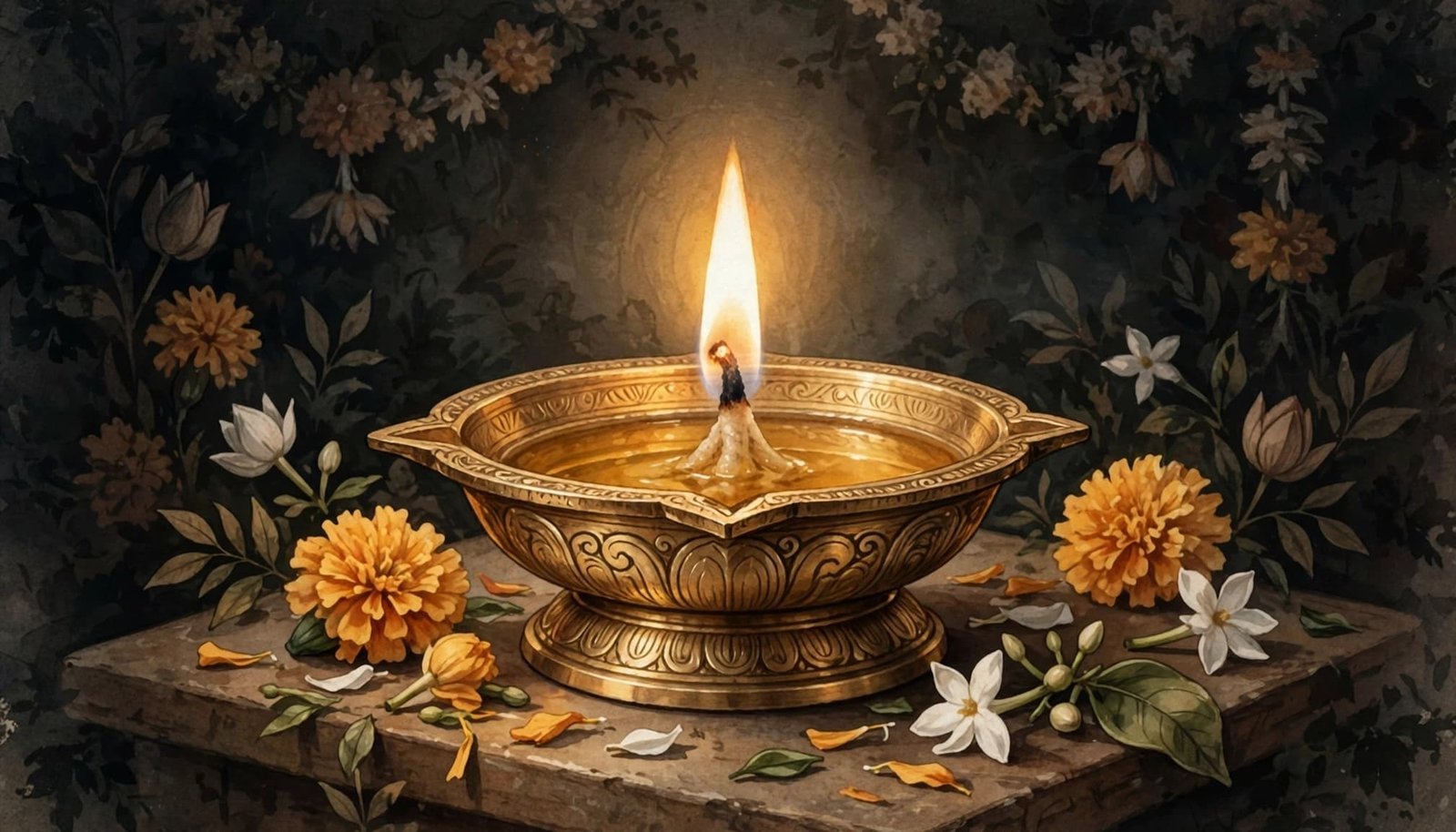
The speakers also explain fire’s ritual purity. Water becomes contaminated when something impure enters it, whereas blazing fire consumes impurities. Ghee is preferred because it’s pure and dear to him, although candles were sometimes used.
Cotton enters the conversation too, described as sattvic, or pure in quality. The affectionate image shared is of Mother Earth appearing as cotton to clothe her children.
Bhandirvan: A wedding and a wrestling challenge
The secret forest wedding
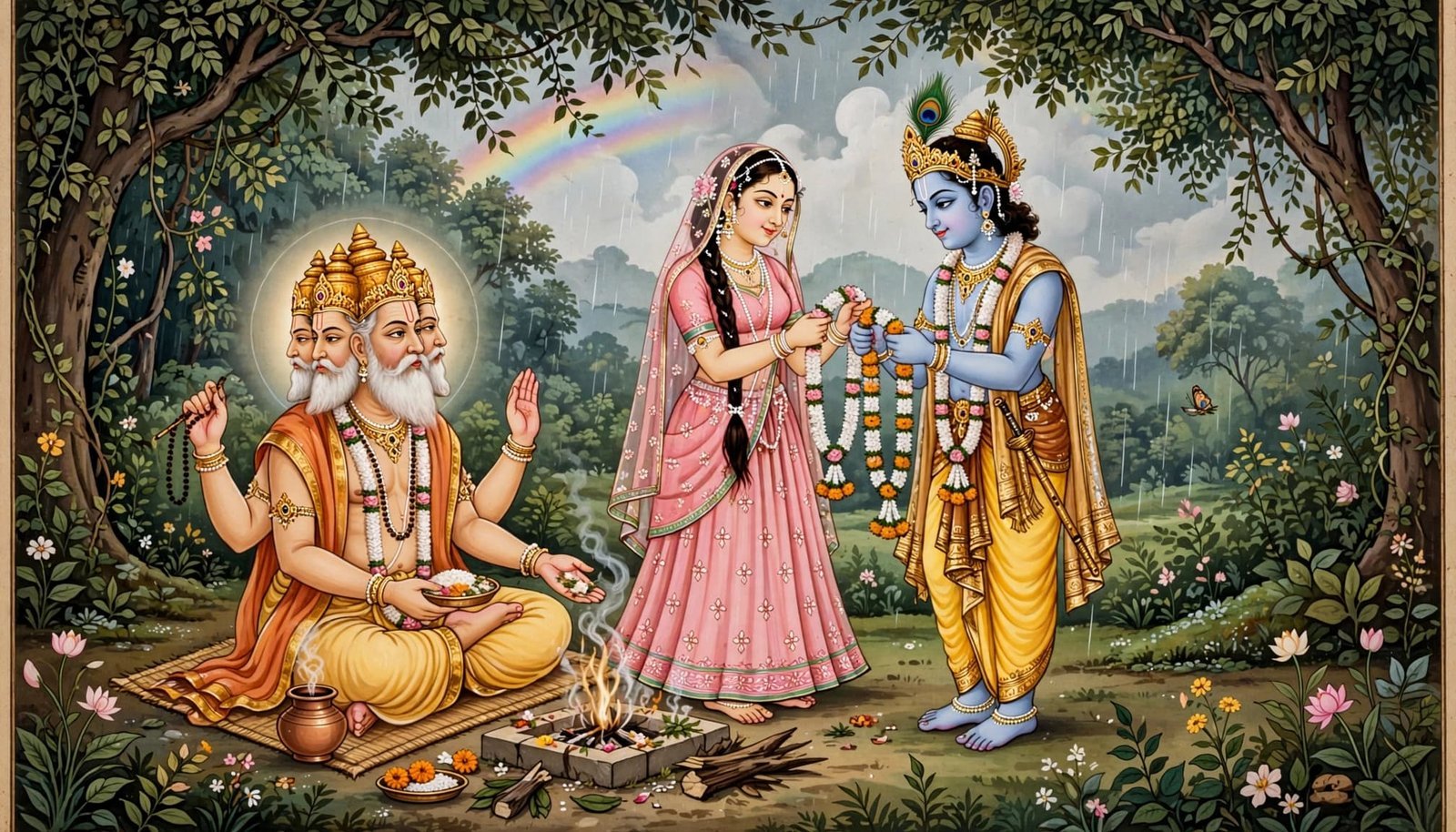
Near Bhandirvan, Nanda Baba carries baby Krishna when a storm begins. A golden maiden appears, Radharani in her youthful form, and offers to protect the child.
Once he is with her, he also reveals his youthful form. Brahma arrives and acts as both priest and the representative who gives the bride’s hand. Radha and Krishna exchange garlands beside the sacred fire.
Around them, sunshine and rainbows fill the clearing while the storm continues beyond it. Afterward, he returns to his baby form with Nanda Baba, and the wedding remains hidden.
Radharani’s glance defeats Krishna
Another pastime begins with Krishna boasting about his strength. The gopis challenge him to wrestle, and Radharani becomes their champion, with Lalita and Vishakha beside her.
Madhumangal encourages him by recalling his victories over mighty opponents. But as he approaches, Radharani’s fragrance reaches him and his knees buckle. Then her sidelong glance pierces his heart. His flute, peacock feather, and yellow cloth fall.
The mighty wrestler is already overwhelmed, before the match has even begun.
How the wedding fits within parakiya love
The wedding prompts a thoughtful exchange about svakiya, wedded love, and parakiya, love experienced outside marriage.
The speakers affirm the wedding pastime while explaining that parakiya remains the prevailing mood of Radha and Radha-Krsna’s human-like pastimes in Braj. The secret ceremony doesn’t replace that ongoing experience.
Separation brings obstacles, longing, and sometimes Radharani’s loving displeasure. Lalita’s lamp offering carries the prayer that she might give her own life to remove every obstacle to their meeting.
Their Gurudev compared separation to boiling sugarcane juice: so sweet that one keeps drinking, even while it burns.
Matvan: Krishna sells clay pots
At Matvan, the conversation turns to matki, an earthen pot, and Krishna’s disguise as a pot seller.
Radharani, Vishakha, and the other gopis arrive to buy pots. He bargains enthusiastically, asking for bangles in exchange. Then his demands become outrageous: perhaps a jeweled blouse would be suitable payment.
By now the gopis recognize the mischievous seller and begin scolding him.
The speaker connects this playful bargaining with Braj’s everyday exchanges. He also recalls Jagannath’s clay cooking pots, whose use gives potters continuing opportunities for service.
Nidhuvan: Nighttime service and a golden dream
Preparing Ranga Mahal
At Ranga Mahal in Nidhuvan, priests arrange a bed, drinks, ornaments, and betel preparations for the divine couple before leaving for the night.
The tradition shared describes the grove’s bushes as gopis who reveal their forms for the nighttime rasa dance. Devotees understand the disturbed offerings found in the morning as signs of the divine couple’s presence.
A separate temple story brings a smile: scattered dice and an overturned game board, attributed to the Lord’s cheating and Radharani’s response.
Radharani dreams of Gauranga
In the dream account associated with Vishwanath Chakravarti Thakur, Radharani sees a golden youth dancing beside a river. Companions sing, play drums and kartals, and weep in ecstasy.
When he calls Krishna’s name, she wonders whether he is herself. Then he calls Radha’s name, and she wonders whether he is the Lord.
The Lord reveals the scene in his Kaustubha jewel and explains his golden appearance as Gauranga. The discussion connects sankirtan with Caitanya Mahaprabhu’s inner purpose: tasting Radha’s love.
Radha Raman: A desire to serve receives an answer
Gopal Bhatta Goswami worshiped a shaligram stone but longed to dress the Lord, seat him on a swing, and serve a form with arms and legs.
The account describes the Lord answering that desire by manifesting as Radha Raman.
His form brings together features associated with three beloved deities: Govinda’s face, Gopinath’s chest, and Madan Mohan’s feet. A Gomati chakra receives worship beside him in place of a separate Radharani deity.
Unlike several other Vrindavan deities discussed during the journey, Radha Raman never left Vrindavan.
Radha Vinod and Gokulananda: Remembering the saints
Lokanath Goswami found Radha Vinod in Kishori Kund near Umrao Gaon. Later, at the other Goswamis’ request, he brought his worshipful deity to Vrindavan. The Lokanath Goswami in this account is the historical saint, not Lokanath Swami Maharaja.
The journey also visits Gokulananda, associated with Vishwanath Chakravarti Thakur, and recalls Mahaprabhu’s Govardhan shila, which he gave to Raghunath Das Goswami.
Nearby are the samadhis of Lokanath Goswami, Narottam Das Thakur, and Vishwanath Chakravarti Thakur. The speakers describe these as places where the saints continue to offer blessings.
Visitors planning a Braj Yatra can learn about these sacred places through Vraja-mandala Darsana. The VMP APP provides information about the sites. A Padayatra is a devotional journey on foot.
Being present through remembrance can be more meaningful than being physically present while the mind wanders elsewhere.
Gopinath and Jahnava Thakurani’s service
The Yamuna’s current exposed Gopinath beneath the sand. Paramananda Bhattacharya discovered the deity and entrusted his service to Madhu Pandit.
Later, Jahnava Thakurani thought Radharani’s deity would look more beautiful beside Gopinath if she were taller. Dream instructions confirmed this service.
The account also identifies Jahnava with Ananga Manjari and describes Gopinath instructing the priests to place her on his left and Radharani on his right.
Remembering Jahnava brings another exchange: could women teach? The answer recalls how leading Vaishnavas gathered to hear her, without even a microphone.
The original Gopinath deities later moved to Jaipur. Their representative forms continue receiving worship in Vrindavan.
Frequently Asked Questions
What is Vraja-mandala Parikrama?
It’s a listening-based pilgrimage through Vraja and Mathura. In this gathering, devotees hear about Krishna’s pastimes and sacred places while gathered in Miami.
Why do devotees offer lamps to Damodar during Kartik?
The discussion explains that the light ultimately comes through Radhika, and devotees seek to please Damodar through her mercy. Ghee is preferred because it’s pure and dear to him, though candles were sometimes used.
What happens in the Bhandirvan pastimes?
One story tells of Radha and Krishna’s secret wedding, with Brahma acting as priest while Nanda Baba carries Krishna. In another, Radharani’s fragrance and sidelong glance overwhelm Krishna before a wrestling match begins.
What does Padayatra mean?
A Padayatra is a devotional journey on foot through Vraja. The article also explains that hearing Krishna’s pastimes can bring Vraja close to those who are far away.
Remaining present through remembrance
The morning’s songs, offerings, and stories return us to loving service. Our holy-name kirtan recording shares that practice of gathering around the holy names.
A Padayatra is a walking pilgrimage through Vraja; hearing Krishna’s pastimes brings Vraja-mandala close from a distance. The Vraja Mandal Parikrama leaves us with a simple understanding: attention matters. Affectionate remembrance brings the Dhama near, even when we’re far away.

TLTRExcerpt
TLTR
Excerpt
Explore the meaning of Kartik’s ghee-lamp offering to Damodar, along with Radha and Krishna’s pastimes, in this virtual Vraja-mandala Parikrama.
Recent Posts
Kirtan Night: Chanting and a Kartik Lamp Offering
Give Miami Day Kirtanathon: Sacred Sound and Shared Devotion
Damodara: Longing for Devotion Beyond Outward Practice
Kartik Evening: Kirtan, Saintly Teachers, and Lamps
Kamyavan Pilgrimage: Krishna’s Pastimes in Braj
Categories
Share
Recent Posts