Events
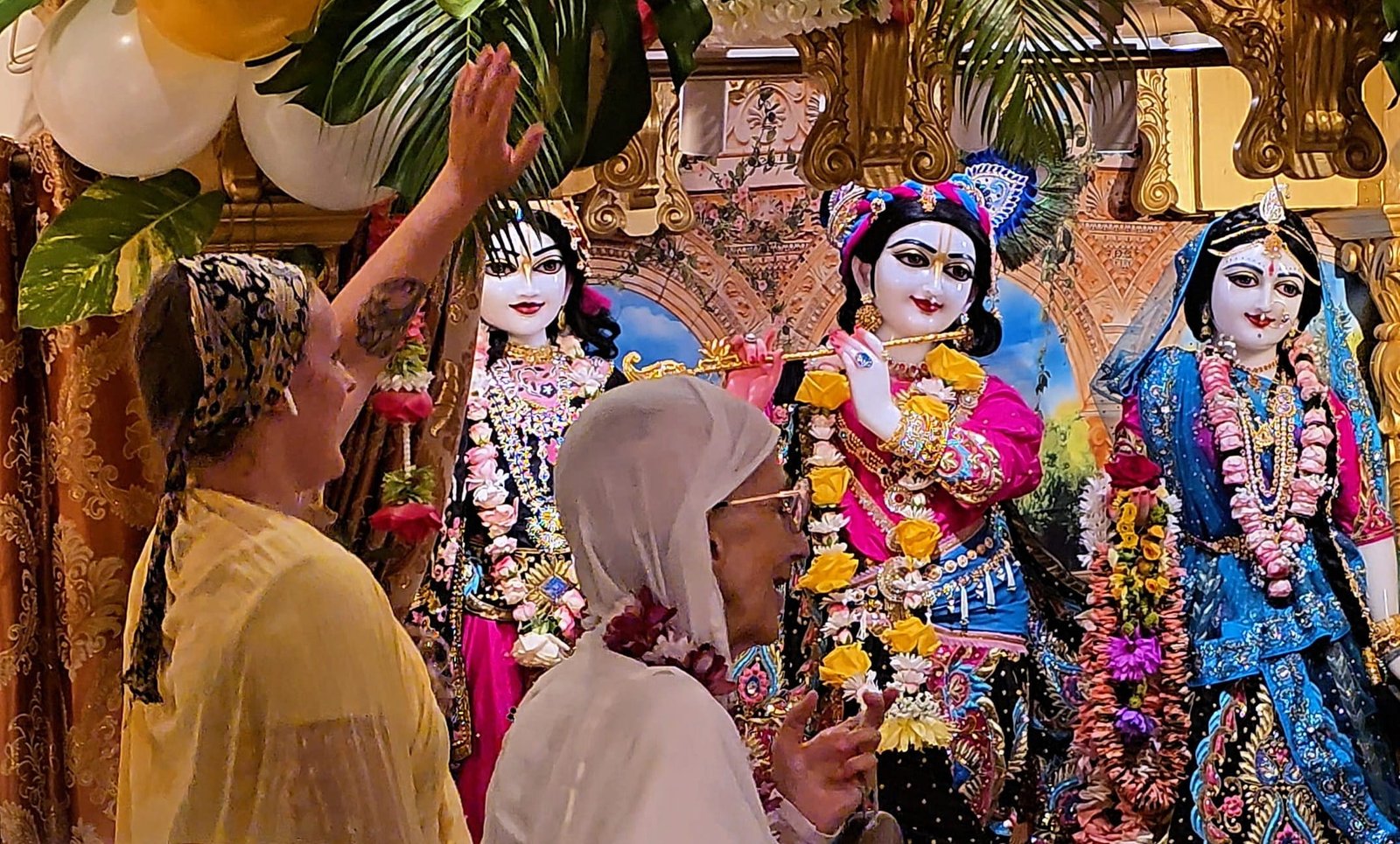
Transcendental Sound, Gurudevi Dancing and Devotees In Ecstasy Jumping
mariakerwin
July 12, 2026
Sometimes a room stops being a room. A few voices call out “Radhe,” someone answers, the kartals begin to ring, and suddenly the walls feel less important than the sound moving through them.
This gathering with Gurudevi Her Grace Srimati Syamarani Dasi is full of that sweet, unguarded mood. There is no performance to figure out, no complicated message to decode. There are the holy names, a rising rhythm, dancing, and a room of people carried along by bhakti.
Entering the Current of Bhakti and Sacred Sound
The first sound is the repeated call of “Radhe.” It comes again and again, not because anyone has run out of words, but because love does not mind repeating a name. A mother says a child’s name more than once. A dear friend does the same. In kirtan, repetition is not empty. It becomes a way of knocking gently on the door of the heart.
The room gathers around this simple call. Voices join, musical instruments enter, and the feeling begins to build. The sound isn’t polished into something distant or untouchable. It is human. It has breath in it. It has tempo. It has that little bit of holy wildness that appears when people stop standing outside a prayer and begin to step inside it.
At one point, Gurudevi Her Grace Srimati Syamarani Dasi dances as the kirtan rises. Her movement is part of the offering, not a separate thing set apart for people to watch. The gathering responds. Devotees jump in ecstasy. The chanting gets louder. Kartals flash and ring. The drums hold the pulse underneath it all, like a heart saying, yes, yes, yes.
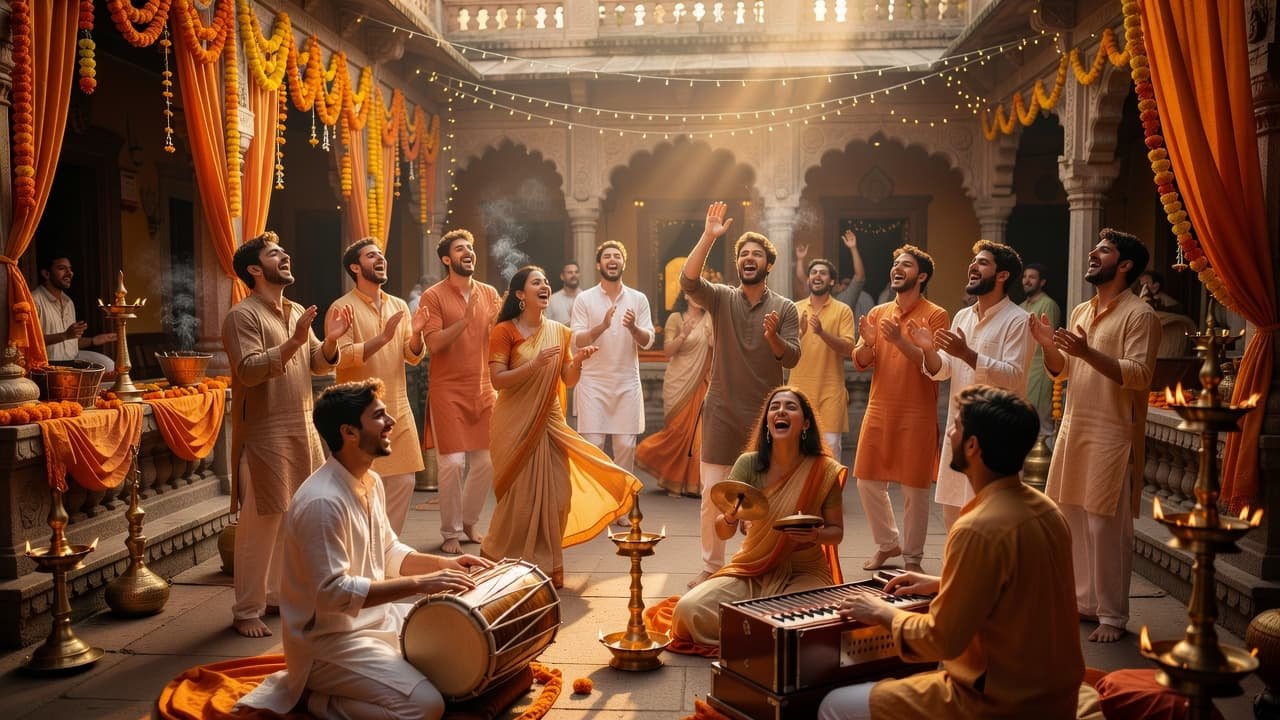
There is something wonderfully plain about it. People are not being asked to become somebody else before they can join. You can arrive tired, distracted, joyful, uncertain, or carrying a whole backpack of life-stuff. The name is still there. The beat is still there. The circle makes room.
In a living kirtan, the sound does not stay on the stage or in the instruments. It moves through every person willing to answer.
For those who have never sat in this kind of gathering, kirtan can look almost too simple at first. A line is sung, the room sings it back, and the cycle continues. Yet the simplicity is part of its mercy. You do not need to have the perfect voice. You do not need to know a long philosophy lecture before you can sing “Hari Bol.” You can begin with one response, one clap, one quiet listening ear.
A Room Full of Radhe, Hari, and Holy Names
“Radhe” is the tender opening current of this gathering. The name carries devotion, longing, and loving service. It is sung with affection, not as an academic idea. Then comes “Hari Bol,” a familiar call in devotional singing that invites everyone to speak or chant the name of Hari together.
The sound shifts, but it does not break. It is more like a river finding another bend. The melody keeps moving. One refrain leads into the next. People who are sitting begin to sway, and those who are already standing are pulled into the rhythm. It is a room learning one breath.
The gathering is described as transcendental, and that word can sound big and floaty if we leave it in the clouds. Here, it is practical. It means the usual noise in the mind gets interrupted for a while. The running list of errands, worries, old arguments, what you should have said yesterday, what might happen on Thursday, it all has to make a little space because the names are coming through.
That does not mean life disappears. Nobody has to pretend their heart is perfectly tidy. Sometimes you come to kirtan with dusty windows inside, a floor that needs sweeping, and thoughts scattered like socks after laundry day. Still, you can offer what is real. A breath. A clap. A whisper of “Radhe.” A moment of attention.
The heart can be a small temple even on a messy day. There may be no fanfare, no perfect altar flowers, no polished spiritual mood. Yet there is room to listen. There is room for the Lord in the heart, Paramatma, to sit with us in silence and sound.
Why the Whole Room Changes the Experience
Listening alone can be beautiful. A set of headphones, a quiet car ride, a single mantra before sleep, all of it has its place. But there is a particular sweetness in communal chanting. When one person’s voice shakes, another voice carries the line. When you forget the response, the room remembers it for you.
That shared current is easy to feel in this gathering. There is an increase in energy, but it is not the energy of people trying to outdo one another. No one has to win a kirtan. The joy gets bigger because it is being given away.
The repeated names and steady percussion make a container where people can be wholehearted. Dancing becomes prayer with the feet. Jumping becomes a body saying what the mind cannot always organize into a sentence. Even the kartals have their own little bright language, ringing in time and calling everyone back to the present moment.
Visit Sacred Vedic Arts for details on its devotional art space and its approach to call-and-response musical meditation. The invitation is beautifully uncomplicated: come as you are, listen, sing if you wish, and let the sound do its gentle work.
The Flow of Chants in This Kirtan
This short gathering has a clear musical arc. Each refrain brings a slightly different flavor, while the room remains held by the same devotional focus.
- The Radhe chant opens the gathering. The name is repeated with warmth and increasing momentum. It gives the room a shared center before the percussion fully takes hold.
- “Hari Bol” lifts the call outward. The phrase comes with a more buoyant feeling. You can almost feel the room answering one another, not as strangers in separate corners, but as one living response.
- “Jaya Hare” carries the praise forward. The chant turns again, keeping the sound fresh without losing the simplicity that makes participation easy.
- The Hari refrain settles into repetition. “Hari” returns insistently, sweetly, almost like a bell that keeps sounding until you notice you have been listening all along.
- Kartals close the moment with brightness. Their ringing does not need a long explanation. It is a small, joyful finale, full of movement and devotional sparkle.
The progression matters because kirtan is not only about the words being sung. It is also about staying with the sound long enough for it to become more than background music. A refrain can seem familiar after the first few repetitions. By the tenth or twentieth, something else may happen. Your attention stops running ahead.
This is why the holy names can remain with you after the drums have gone quiet. The melody may return while you are washing dishes, walking to your car, or sitting in a difficult moment when you do not have a clever answer. A small fragment of the chant comes back, and there is a little space around the trouble.
That is not a dramatic promise. It is a humble one. Sound can give the mind somewhere softer to land.
Dancing, Jumping, and Letting the Body Pray
There is an old assumption that spiritual life must look solemn all the time, as if joy is somehow less holy than seriousness. This kirtan says otherwise. Devotees jump. Gurudevi dances. The room is alive. Nobody is being asked to hold themselves at a polite distance from their own happiness.
Bhakti does not ask us to become stiff little statues. The body is part of the life we have been given. Hands clap. Feet move. Eyes close. Shoulders loosen. A smile appears before someone has had time to decide whether they were planning to smile. It is okay. Let it happen, dear one.
Of course, no one needs to force ecstasy. Trying to look spiritual is a tiring job, and frankly, it is not much fun. You can sit in the back, keep your hands in your lap, and listen. You can clap on the beat if you catch it. You can sway a little, or not at all. The invitation is not, “Perform devotion correctly.” It is, “Come near.”
The physical expressions in this gathering arise from shared affection for the names. That is what keeps the joy grounded. The jumping is not random excitement. The dancing is not there to make a spectacle. The movement follows the call of the chant, like a flower turning toward the sun.
The Instruments Hold the Room Together
Kartals are small hand cymbals, but in kirtan they carry a bright, insistent presence. Their sound cuts through the larger wash of voices and drums. Ding, ding, ding, a little reminder to stay here. They do not need to be loud to be felt.
The drum gives the gathering its earthiness. It brings the chant down into the body, into the feet and palms and chest. Meanwhile, the voices keep the focus on the names themselves. Each element has a place. No single instrument needs to dominate.
A harmonium is often part of this devotional sound world too, holding melody with its warm, breathing tone. Whether you are playing an instrument, singing along, or simply receiving the sound, the music becomes an offering made by many hands and many hearts.
Friday night kirtan and sangha details from Sacred Vedic Arts offer a gentle doorway for people who want to experience a bhakti gathering in community. No prior experience is needed. That part feels important. Sometimes the first step is simply finding a room where you are allowed to be new.
Staying With the Sound After the Music Ends
The video is brief, but the mood does not have to end when the final kartal rings. You can carry a tiny piece of it with you. Not in a heavy, serious way. More like keeping a flower in your pocket and finding it later.
Try sitting for five minutes sometime. Let your back find a comfortable line. Notice the breath coming and going. Picture a small altar in the heart, simple and unpretentious. Maybe there is a lamp. Maybe one flower. Offer a word of gratitude, a regret you have been carrying, or the name of someone who needs help.
Then listen.
You do not have to manufacture a mystical experience. You do not have to hear a booming answer from the sky. The practice is in the turning. The small return. The willingness to remember that we are not alone in our thoughts.
A recording of kirtan can be a companion in that return. So can your own quiet repetition of a holy name. Even one sincere “Hari” on a hard day has a place. A whispered name is still a name. A quiet heart is still a heart.
If you are near Miami, Sacred Sundays at Sacred Vedic Arts offer a gathering space for bhakti yoga practitioners at every level. It is good to have places where seekers, regulars, shy singers, strong singers, dancers, and the person who only came because a friend asked them can all sit in the same room.
Finding Fellowship Beyond the Gathering
A devotional life has room for solitude, but it also needs friendship. Someone to chant with. Someone to laugh with after the program. Someone to remind you that you are not the only person who has ever struggled to keep a practice going while life is doing its funny, messy life thing.
Juicy MagiK’s Agora community portal is open for genuine questions and heartfelt appreciation. There is no need for a grand entrance. Bring the question you have, even if it feels small. Often the small questions are the ones that open the door.
Supporting the work that makes these offerings possible is another form of participation. Those who wish to help can support Juicy MagiK projects with Sats. A project built around devotional life, sacred travel, meditation, and community is carried by many small acts of care.
The thread running through it all is not complicated. The name is sung. Someone responds. A rhythm begins. The heart remembers its way home, one sound at a time.
Let the Holy Names Keep Ringing
The beauty of this kirtan is not that it tries to impress anybody. It is a room of people giving their attention to Radhe, Hari, and the shared joy of chanting together. Gurudevi dances, devotees jump, the kartals shine through the rhythm, and the sound makes space for each person present.
You do not need to arrive with a perfect voice or a perfectly organized inner world. Bring what is true. Sit near the sound. Let the holy names meet you where you are.
Sometimes that is plenty. Sometimes it is more than plenty.

TLTRExcerpt
TLTR
Excerpt
Transcendental Sound, Gurudevi dancing and Devotees In Ecstasy Jumping to “Radhe Radhe” and “Hari Bol” in this devotional kirtan at Gurudevis Guru Puja.
Recent Posts
The Holy Names Are Like Cooling Water in the Summer Heat
One Voice, One Heart, One Beautiful Community Chant in the Park
Chant the Hare Krishna Maha Mantra and Come Home to Your Heart

Naked People, Alcohol, Mode of Passion, Boat Music, and No Peace in Miami
Transcendental Sound, Gurudevi Dancing and Devotees In Ecstasy Jumping
Categories
Share
Recent Posts