Events
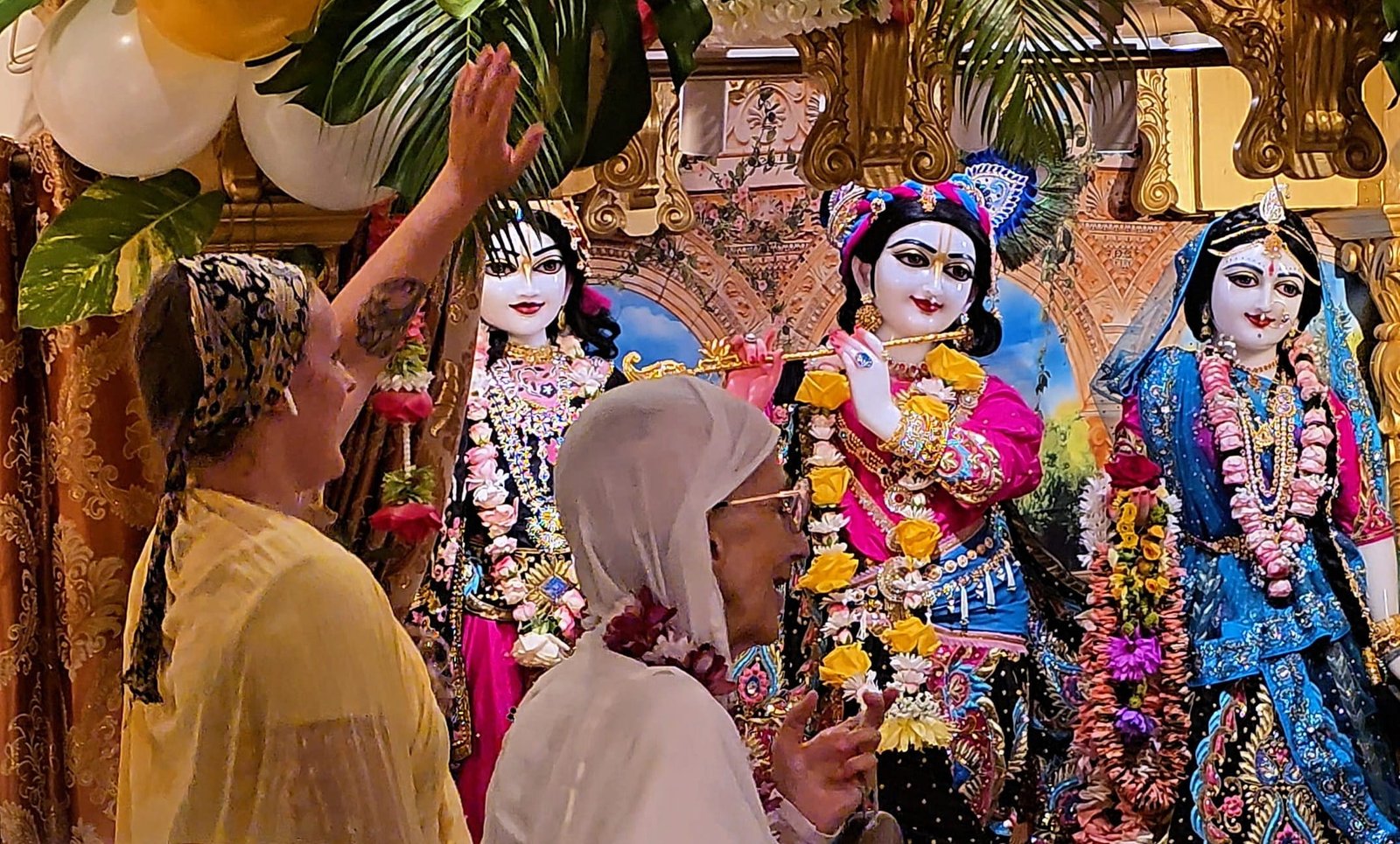
Rare Chaitanya Deity Temple Installation and Rocking Kirtan to Welcome Him
mariakerwin
July 3, 2026
Sometimes the most honest prayer is not a polished speech. It’s a room of people calling out the holy names together, again and again, until the mind has somewhere kinder to rest.
This gathering welcomes Lord Chaitanya through a rare, authentic deity installation ceremony at Sacred Vedic Arts. There is no need to understand every word before you listen. Let the kirtan meet you where you are, a little tired, a little hopeful, maybe holding more than you can name.
A Welcome for Lord Chaitanya, Carried by Many Voices
The video opens in the most direct way possible: Hari Bol. Hari Bol. Hari Bol.
No long speech. No need for an elaborate introduction. The holy name enters the room and people answer it with their voices. The sound has motion. It gathers. It repeats. It becomes a shared place to stand.
“Haribol” is often understood as a joyful call to speak or sing the name of Hari, a name for the Divine. In a kirtan setting, it can feel like an invitation and a response at once. One voice calls out, another voice joins, then another. Before long, the room itself feels like it has begun to breathe.
This is the sweet thing about communal chant. You don’t have to carry the whole prayer alone. If your voice is small that day, someone else’s is there. If your mind wanders off to its little snack table of worries, the rhythm is still going. You can return on the next “Hari Bol.” No spiritual paperwork required.
The gathering takes place with Sacred Vedic Arts, a devotional art gallery, temple, cultural center, and spiritual community in Miami. The installation of Lord Chaitanya is the heart of the occasion, and the kirtan is not background music around it. The chanting is part of the welcome.
A deity installation may be a formal sacred occasion, yet the sound in this room stays wonderfully human: many voices, repetition, music, and the simple willingness to keep calling the names of God.
Lord Chaitanya is honored in the bhakti tradition for sharing the practice of chanting the holy names with open arms. That mood comes through here. The gathering isn’t built around being impressive. It is built around remembrance, affection, and coming together.
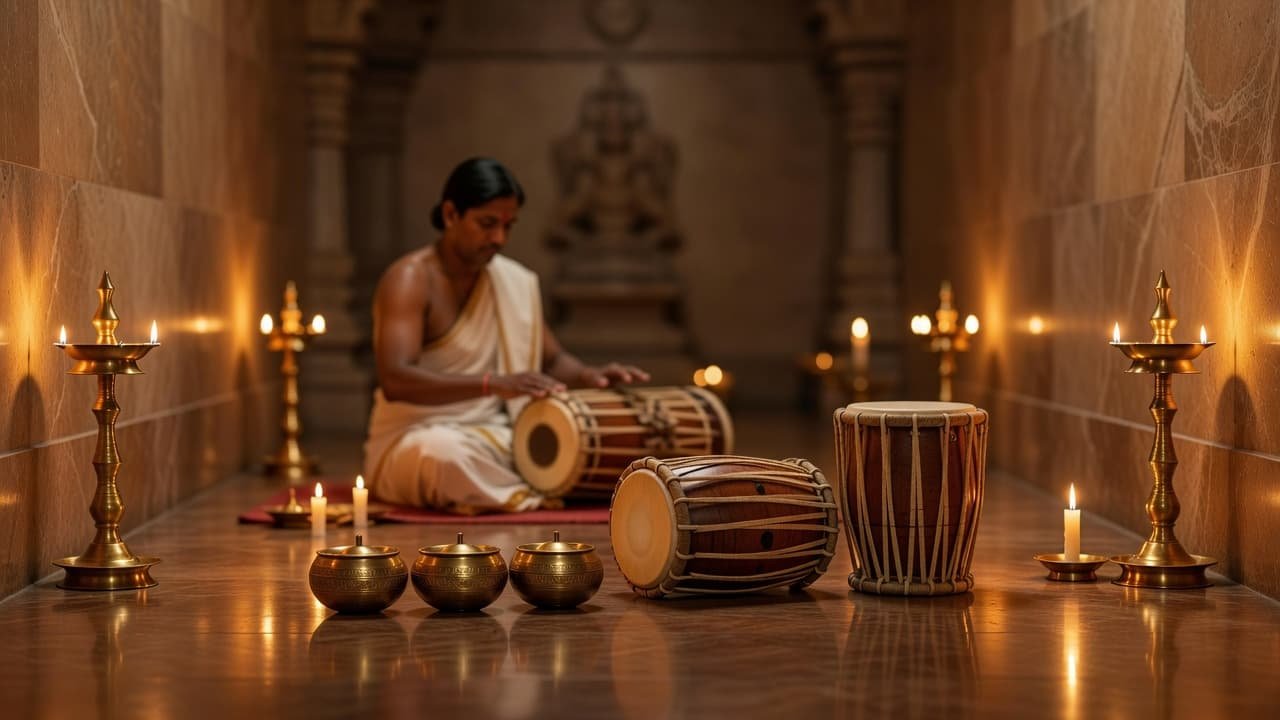
For the opening minutes, “Hari Bol” comes in steady rounds. Music supports the chant, but the voices are the center of gravity. The repetition doesn’t feel like going in circles. It feels more like walking a familiar path until the noise inside begins to settle.
There is something tender about a chant that asks so little of us. You don’t need a perfect voice. You don’t need a perfect past. You don’t need to have sorted out every strange cupboard in your inner house. You say the name. You hear the name. You say it once more.
That can be enough for the moment.
The opening chant also gives the room a common rhythm. Some people may know every phrase by heart. Others may be listening for the first time, trying the words gently, perhaps a half-beat behind. Both belong. Kirtan has room for the person who sings full-throated and the person who is still learning how to let their heart make a sound.
The word “Hari” carries devotional meaning that is larger than a quick translation. It points toward the One who takes away suffering and draws the heart toward love. “Bol” means speak or chant. Put together, Hari Bol becomes a joyful nudge: say the name. Bring it into the air. Let your own ears receive it too.
That last bit matters. Chanting is not only about producing sound. It is also about hearing. You offer the name, then you let it return to you.
Govinda and Radhe Bring a Softer, Sweeter Mood
Around the next movement of the kirtan, the names turn toward Govinda and Radhe. The chant rolls through phrases such as “Govinda, Govinda, Radhe Radhe, Radhe Govinda.” A bell can be heard among the musical sounds, adding a small bright shimmer to the room.
Govinda is a beloved name of Krishna. Radhe, or Radha, is cherished in bhakti as Krishna’s eternal beloved and the fullest expression of devotional love. The names come together with a softness that is hard to explain with tidy religious language. Better to say this: they sound like longing, friendship, sweetness, and home.
The chant doesn’t pause to offer a lecture on theology, bless its little heart. It lets the names carry their own feeling. Repetition gives you time to become familiar with the sound without forcing your mind to solve it.
For someone new to this kind of devotion, that can be a relief. You can begin with simple attention. Hear “Govinda.” Hear “Radhe.” Notice what happens when the same names return, held by a whole room rather than a single voice.
There is a lovely dignity in that kind of simplicity. Sacred life isn’t reserved for silent mountaintops, antique cathedrals, or moments when the weather of your life finally behaves itself. A temple room full of people, instruments, bells, imperfect voices, and devotion is holy too. Sweat and all. Joy and all.
On the Sacred Vedic Arts Instagram page, the community shares its ongoing kirtan life and gatherings. That continuity matters. A single evening can be precious, but devotional practice also grows through returning, singing again, seeing familiar faces, and making a little more space in the heart.
The Hare Krishna Maha-Mantra Takes the Room
After the Hari Bol and Govinda-Radhe passages, the kirtan returns briefly to Hari Bol and then enters the Hare Krishna maha-mantra:
Hare Krishna, Hare Krishna, Krishna Krishna, Hare Hare
Hare Rama, Hare Rama, Rama Rama, Hare Hare
This is the great chant at the center of the gathering. The melody and pacing move through repeated rounds, with the names of Krishna and Rama carried by the music and the group response.
The word “maha” means great, and “mantra” can be understood as a sacred sound or prayer carried through repetition. Yet none of that needs to become heavy. The mantra is also something you can sing while folding laundry, sitting in traffic, walking through an airport, or standing in a cluttered kitchen wondering how so many dishes got there.
The mind likes to scatter itself across a hundred little worries. A mantra gives it a gentle thread to hold. Not a hard command. Not a scolding. A thread.
The chant in this gathering has a rocking, forward-moving feel. The names repeat. The room answers. Then the names repeat again. At points, the flow moves through “Hare Govinda” alongside the Hare Rama phrases, bringing Govinda back into the current without breaking the devotional mood.
You may notice how little the chant asks you to analyze. There is no argument to win. No clever answer to produce. The invitation is to participate, even if participation begins as listening.
When the mind is noisy, you don’t have to wait for silence before you chant. The name can be the small lamp you carry into the noise.
Staying With the Sound When Life Is Not Neat
Kirtan is often pictured in glowing rooms with flower petals, beautiful altars, and people who appear to have their spiritual socks perfectly matched. Those things can be lovely. But the practice does not depend on perfection.
A living devotional life happens in the middle of ordinary conditions. It happens when the body is tired. It happens when the road is loud, when construction is clanking nearby, when plans get bumped around, when the heart feels tender and a bit floppy. It happens when somebody misses a note and keeps singing anyway.
That is one reason a room full of voices can be so comforting. The sound does not demand that everyone arrive in the same state. It gathers people as they are. One may be joyful. Another might be grieving. Someone else might simply be curious about what all this “Hare Krishna” business is about. The names make room.
If you want to sit with the video as a small home practice, keep it simple:
- Listen through one full chant without multitasking, if you can manage it.
- Repeat a phrase that feels natural, such as “Hari Bol” or “Radhe Govinda.”
- Let the Hare Krishna maha-mantra play softly while you breathe and listen.
- If your mind wanders, come back without making a big dramatic movie about it.
That last one is a little blessing for all of us. Minds wander. They wander professionally. The return is part of the practice.
You can picture the heart as a tiny inner temple. Maybe its floor is dusty. Maybe there are old boxes stacked in a corner, mysterious emotional storage units from 2009. Still, there is room for a lamp, a flower, a whispered name. The presence of God is not waiting outside until the place looks fancy.
The Closing Rounds Keep the Prayer Moving
The final portion continues through the Hare Krishna and Hare Rama names. The momentum eases and returns in waves, but the gathering stays with the mantra. That faithfulness is one of the quiet gifts of a closing round.
Nobody needs to manufacture a grand ending. The names themselves are enough.
Hare Krishna. Hare Rama. Again and again.
The video closes in that atmosphere of sustained sound. It leaves no big conclusion stamped in gold letters. It leaves a simple impression: a room gathered in devotion, welcoming Lord Chaitanya, and giving the holy names a place to live out loud.
For those who already chant, this may feel familiar in the bones. For those who are new, it can be a gentle first doorway. You don’t have to force an experience. You can listen. You can sing one line. You can let the rhythm meet you wherever you are sitting today.
Let the Holy Names Be Close
This Chaitanya deity installation is held in the warmth of collective kirtan, where Hari Bol, Radhe, Govinda, Krishna, and Rama move through the room like a shared prayer.
The strongest thing here is not complexity. It is returning to the name. One round, then another. One breath, then another. A room full of people remembering that love can be spoken, sung, heard, and offered back.
A companion recording from this installation traces the kirtan through Gauranga, Nitai, Hari Bol, and Radhe Radhe with a minute-by-minute flow. Follow along with that chant here.

TLTRExcerpt
TLTR
Excerpt
Sing along at a rare Chaitanya Deity installation with Radha Govinda, and the Hare Krishna Maha Mantra, let sacred names fill and soften your heart.
Recent Posts
The Holy Names Are Like Cooling Water in the Summer Heat
One Voice, One Heart, One Beautiful Community Chant in the Park
Chant the Hare Krishna Maha Mantra and Come Home to Your Heart

Naked People, Alcohol, Mode of Passion, Boat Music, and No Peace in Miami
Transcendental Sound, Gurudevi Dancing and Devotees In Ecstasy Jumping
Categories
Share
Recent Posts