Sacred Vedic Arts
Before the mind has opened all its little drawers of worry, there is a sweet hour for remembering God during the quiet peace of brahma muhurta. Mangala arati is that hour, a gathering of lamps, bells, sacred names, and hearts turning toward Sri Krishna.
This early worship isn’t about performing spirituality perfectly. It’s about coming as you are, perhaps sleepy, perhaps distracted, perhaps carrying yesterday in your chest, and placing it near the lotus feet of Lord Krishna, a tradition carried forward with devotion in every Mangla Aarti around the world.
Key Takeaways
- Early Morning Devotion: Mangala arati takes place during the peaceful hours of brahma muhurta, offering a serene way to anchor the heart before the noise of daily life begins.
- The Power of Kirtan: Shared congregational singing of the divine names and the Hare Krishna maha mantra brings joy and binds the community together in prayer.
- Honoring the Lineage: The ceremony deeply respects the guru parampara, acknowledging the spiritual master and the unbroken chain of disciplic succession.
- Sacred Remembrance: Participants remember the divine pastimes of Sri Radha and Sri Krishna in Vrindavan, alongside sacred figures like Vrinda Devi and Giriraj Govardhan.
A Morning Filled With Divine Names
The ceremony opens in a spirit of glorification, beginning with prayers like the Sri Guruvashtakam dedicated to the spiritual master, who is seen as an ocean of mercy. There are calls of victory, prayers to Sri Guru, Sri Krishna, Hari, the devotees, and the great teachers who have carried bhakti through the ages. The names arrive one after another like little lamps being lit.
In this kind of worship, names aren’t merely labels. Govinda, Gopala, Madhava, Mukunda, Murari, Nanda-nandana, each one carries an intimacy as you chant the holy name. They call to mind Lord Krishna as the protector of cows, the beloved of Vrindavan, the son of Nanda Maharaja, the playful flute-player, and the ultimate shelter provided by a true spiritual master.
You don’t need to hold every Sanskrit or Bengali word in your head. Sometimes you simply let the sound wash over you. The heart recognizes a melody before the intellect has had its morning tea, drawing strength from the wisdom of the spiritual master.
The prayers keep returning to one simple place: the shelter of the lotus feet of the spiritual master and Lord Krishna, where the restless mind can finally rest.
The Sacred Mood of Mangala Arati
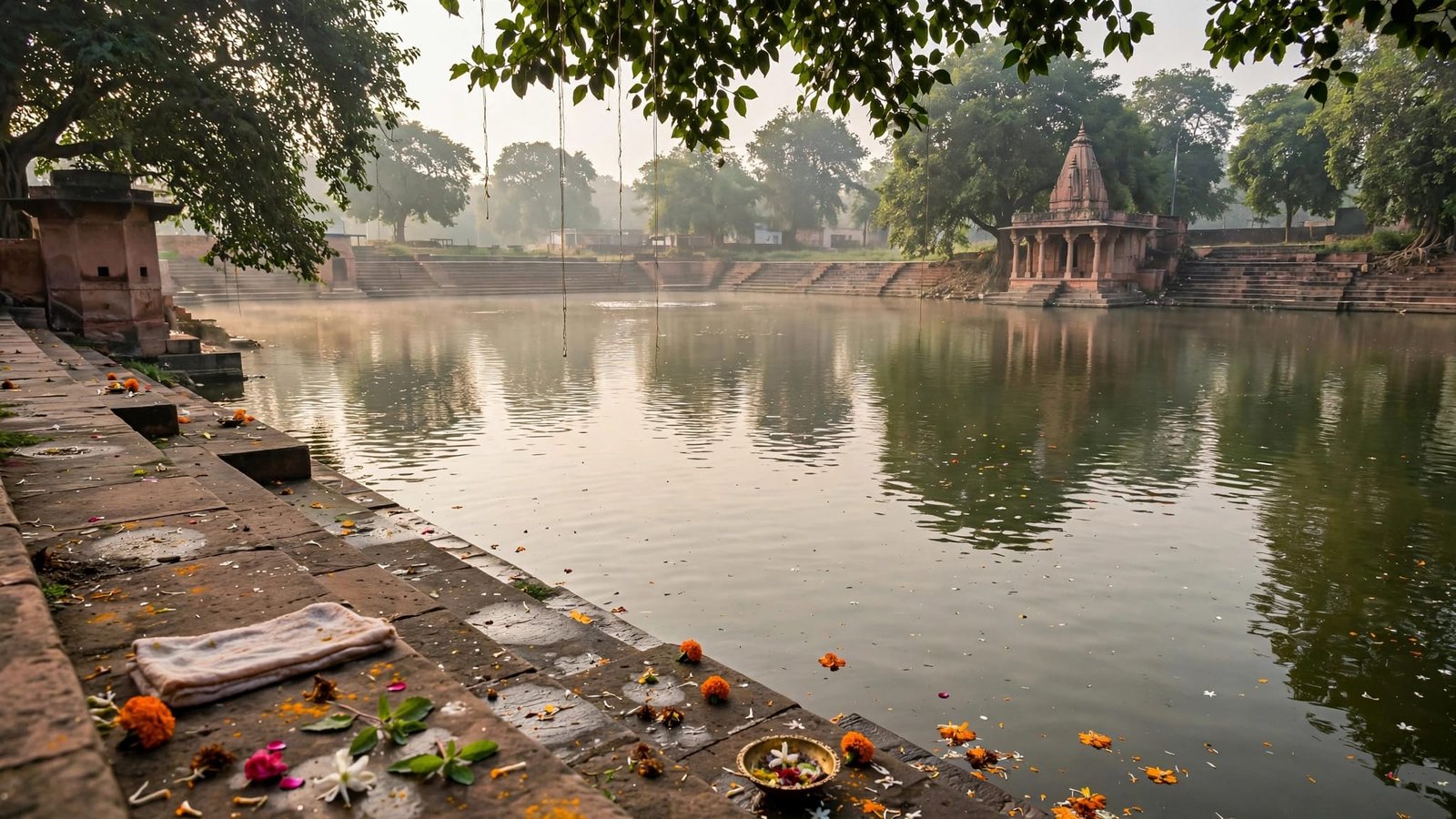
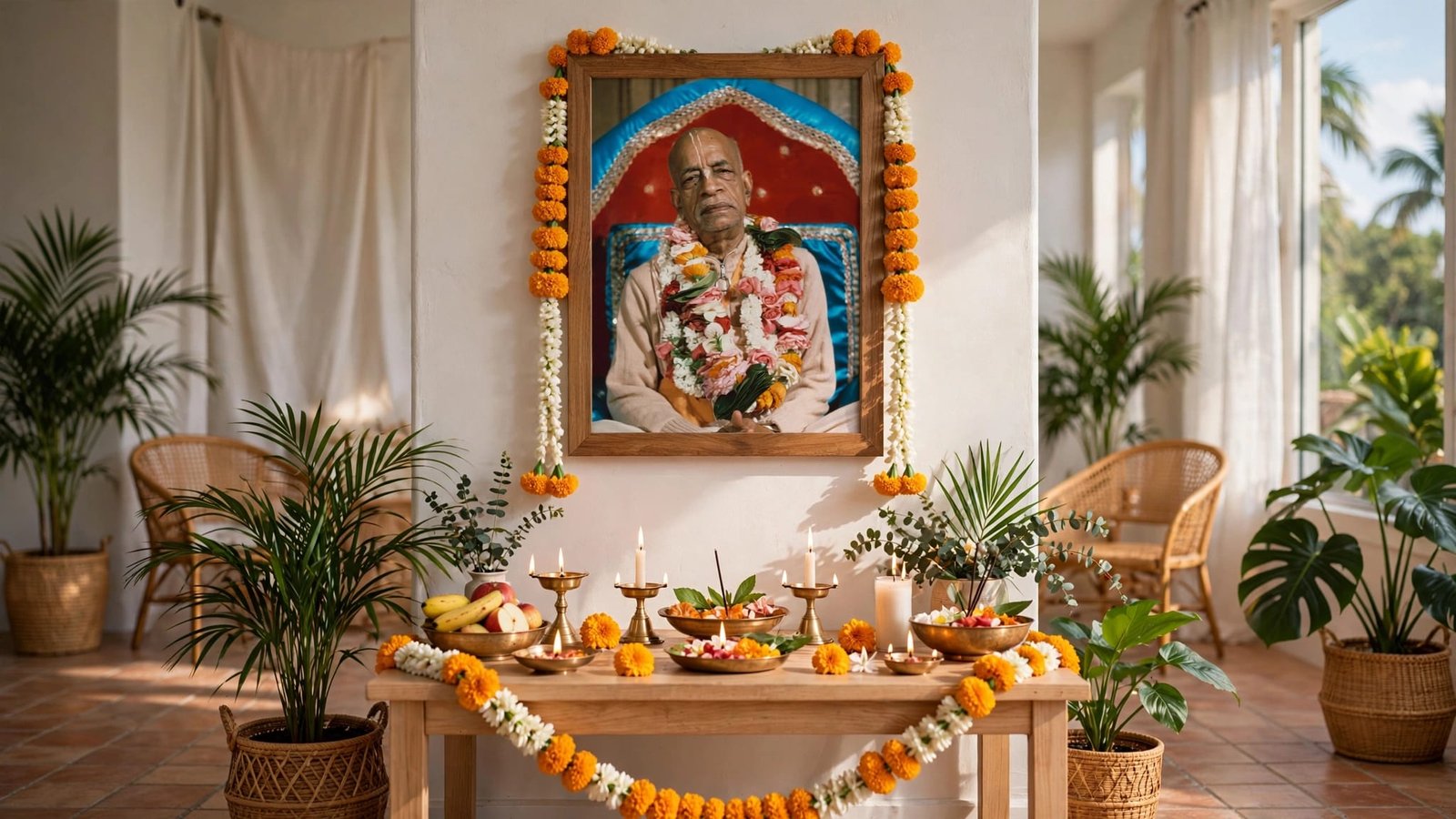
Mangala arati is traditionally offered in the very early morning during brahma muhurta, when the day is still soft around the edges as part of daily temple worship. Oil lamps flicker. Bells ring. Voices gather. The room becomes fragrant with flowers, incense, and the kind of longing that can’t be put into ordinary language.
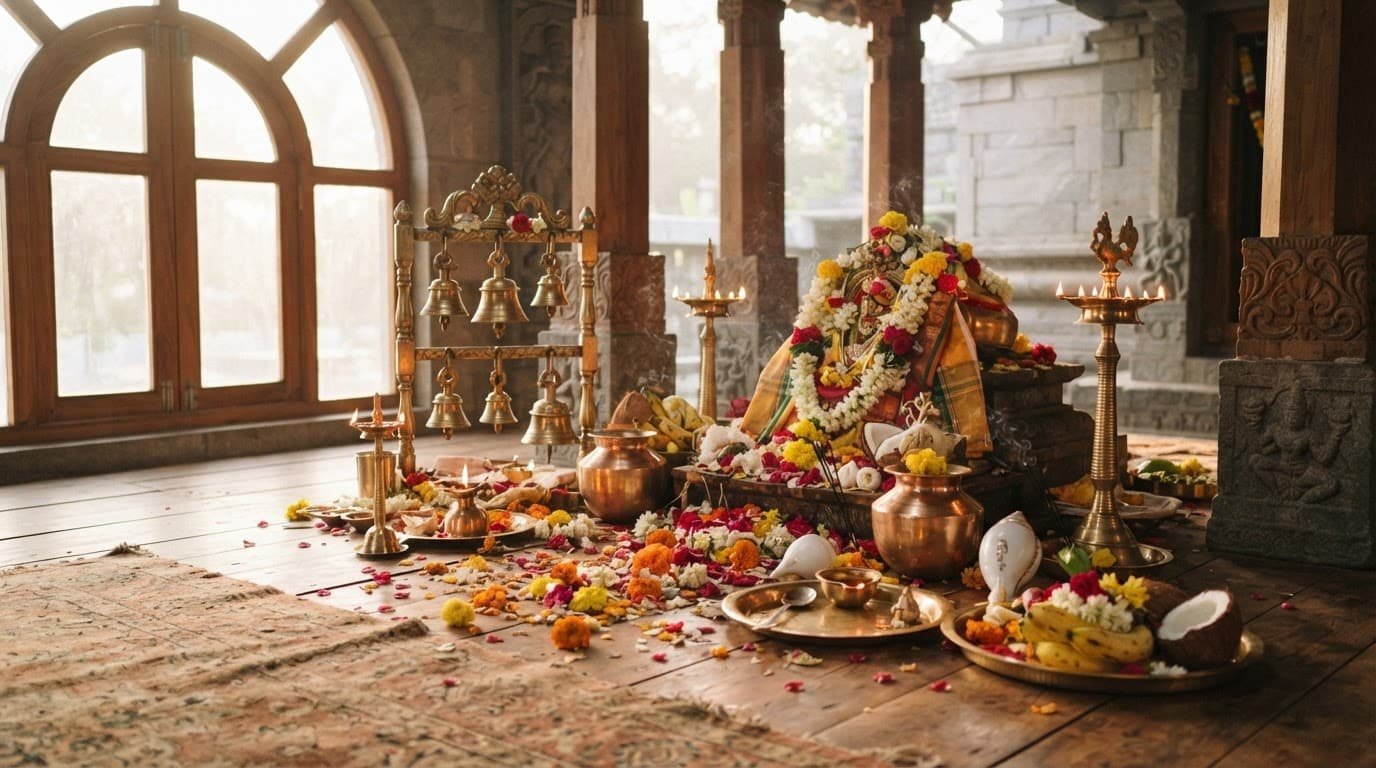
There is something wonderfully practical about beginning this way. Before we dive into the clattering noise of material existence, schedules, news, and chores, we anchor our hearts in early devotional service.
The ceremony moves through praise, prayer, and musical worship. Bells punctuate the singing, and the offerings brought before the altar, touched by the grace of Maha Lakshmi, soon become sanctified as bhagavat prasada. The sound isn’t background decoration. It is part of the offering, calling the senses back from their usual wandering and gathering them into remembrance.
Bowing at the Lotus Feet
Again and again, the prayers offer respect to the lotus feet of the Lord, the spiritual master, and the great devotees. In bhakti language, the lotus feet are not distant or abstract. They speak of refuge, humility, and the surrender required to transcend material existence and the lingering effects of sinful activities. Under the compassionate guidance of the spiritual master, these practices anchor the soul in peace.
Devotional service appears here in many tender forms:
- Singing the names and qualities of Sri Krishna with others.
- Asking the spiritual master for mercy and guidance.
- Remembering the Lord’s associates and sacred places.
- Offering one’s restless mind, voice, and attention in prayer.
- Seeking freedom from fear, pride, and material distraction.
This isn’t self-erasure. It is more like setting down a bag you have been carrying for far too long. The ego says, “I have to hold everything together.” Bhakti says, “Come closer. Let love hold you for a while.”
Kirtan Makes the Prayer Breathe
At the heart of mangala arati is kirtan, the shared singing of divine names and prayers that forms the foundation of the sankirtana movement. A lead voice sings. Others answer. Then the whole room joins in through congregational chanting of the holy name, and suddenly no one is merely watching. Everyone is inside the song.

The sounds of harmonium, kartals, drums, clapping, and bells give the prayers a body. They make room for joy. This vibrant tradition of congregational singing was brought to cities around the world by Srila Prabhupada. A quiet prayer can be beautiful, of course. But there is a special medicine in singing together, especially when your own faith feels a bit thin and someone else’s voice carries you onward.
The ceremony includes repeated cries of Hari bol, which means, “Chant the name of Hari.” It is both an invitation and a celebration designed to awaken deep attraction to the holy name. Say it again. Let the room hear it. Let your own heart hear it.
Remembering the Guru Parampara
Mangala arati honors the guru parampara, the unbroken line of disciplic succession that carries transcendental knowledge originating from the Vedic scriptures. Bhakti is received through relationship. The path isn’t invented in isolation, like a clever little self-help project cooked up on a Tuesday afternoon.
The prayers offer reverence to the spiritual master and to the lineage of saints and teachers. When connecting with the spiritual master, the seeker learns to honor this unbroken chain, because the spiritual master acts as a transparent medium for divine grace. Their role is not to become the center of worship in place of God. Rather, they point toward Krishna, teach the holy name, and show what a life of devotion can look like in a human body, with all its tenderness, discipline, and surrender, guided always by the wisdom of the spiritual master.
The names of Sri Caitanya Mahaprabhu, Sri Nityananda Prabhu, Sri Advaita, Srivasa, and the community of devotees are also remembered. Through the mercy of Sri Caitanya Mahaprabhu, this ancient wisdom is shared freely with everyone. This is the family feeling of Gaudiya Vaishnava devotion, where every spiritual master and disciple share in the journey. No one has to walk alone.
The Maha Mantra and the Call of Hari Bol
The Hare Krishna maha mantra, as recommended in the Vedic scriptures, becomes a central current in the singing. It is repeated with warmth, rhythm, and increasing joy, not as a cold formula but as a direct call to the Divine.
Hare Krishna Hare Krishna
Krishna Krishna Hare Hare
Hare Rama Hare Rama
Rama Rama Hare Hare
The mantra calls on Hare, along with Lord Krishna, who is the Supreme Godhead and the Supreme Personality of all existence. It is a prayer for loving service, a cry of the heart, and a place to return when the mind is busy making a small dramatic opera out of everything.
In the ceremony, the mantra is followed by more calls of Hari bol. Chanting the holy name continuously helps cultivate steady Krishna consciousness by washing away inner turbulence. One repetition may feel ordinary, and then another, until the holy name gradually begins to clear a space within, much like opening a window in a room that has been closed too long.
Radha, Krishna, and the Sacred Land of Vrindavan
The songs glorify Sri Radha and Sri Krishna together, celebrating Radha and Krishna as the eternal embodiment of divine love with loving remembrance of Radha-Govinda. This is not a dry theology lesson. It is love-language, full of beauty, longing, service, and the sweetness of divine relationship.
Names such as Brij Nandan, Yasoda Nandan, Gopala, and Bansidhari bring Krishna’s Vrindavan pastimes close. As the Supreme Godhead, He is remembered through these transcendental pastimes as the youthful cowherd boy, the beloved of the gopis, the one who plays the flute and steals hearts. Texts like the Brahma Samhita further illuminate these eternal forms. Not bad for a morning gathering before sunrise.
The prayers also honor Vrindavan, Radha Kunda, Shyama Kunda, and the Yamuna. These places are not treated as scenic backdrops, because for devotees, they are living fields of remembrance where the transcendental pastimes of Radha and Krishna are eternally present.
Prayers to Vrinda Devi and Giriraj Govardhan
A special portion of the worship offers prayers to Vrinda Devi, also known as Tulasi Maharani. She is remembered alongside Maha Lakshmi as the presiding queen of Vrindavan, arranging the settings of Radha and Krishna’s pastimes and granting entrance into loving service.
The recurring prayer, Vrinde namaste charanaravindam, offers respect at her lotus feet. There is a beautiful honesty in it. The devotee asks for mercy, acknowledges mistakes, and seeks shelter, knowing that true protection comes by the grace of the spiritual master. No pretending. No spiritual posing. Just, “Please help me serve.”
Giriraj Govardhan is also praised with joyful calls of victory. Govardhan is beloved in Krishna’s pastimes and honored as a sacred hill that offers shelter, ultimately leading one to receive bhagavat prasada under the guidance of the spiritual master. Nature itself becomes part of the prayer: forest, river, hill, flowers, cows, flute song, morning air. The world is not empty matter. It can become an altar.
Frequently Asked Questions
What is Mangala arati?
Mangala arati is a devotional morning ceremony performed during brahma muhurta, featuring the offering of lamps, incense, bells, and flowers to Lord Krishna. It serves as a peaceful anchor for the day, gathering hearts through prayer, mantra, and music.
Why is kirtan central to the ceremony?
Kirtan is the shared congregational chanting of divine names, which gives bodily expression to prayer and creates a collective spiritual experience. It helps quiet a restless mind and draws participants directly into the mood of devotion.
What is the significance of the guru parampara in Mangala arati?
The guru parampara represents the unbroken disciplic succession through which transcendental knowledge is passed down. Honoring the spiritual master ensures that seekers receive guidance, mercy, and a transparent connection to the divine.
How does Mangala arati affect the rest of the day?
While morning prayers do not eliminate daily challenges or external noise, they help individuals maintain inner peace and Krishna consciousness. Carrying this sacred mood into the day changes how one meets life’s responsibilities.
Carrying the Morning Into the Day
The closing prayers ask for freedom from selfish desires and for the chance to remain fixed in devotional service under the shelter of the spiritual master. That is the thread running through the whole arati, emphasizing loving devotion rather than spiritual achievement or a shiny identity.
A morning ceremony does not mean the rest of the day will be tidy. Your inbox may still have opinions, and the traffic may still be traffic. However, carrying the mood of Mangala arati keeps one anchored in Krishna consciousness and changes the place from which you meet it all.
The bells fade, the lamps are offered, the final Jaya rises into the air, and something gentle remains. You remember that you are never alone and that you can always take shelter at the lotus feet of the spiritual master and Lord Krishna, which is the true home of the soul.

TLTRExcerpt
TLTR
Excerpt
Learn what happens during Mangala arati at brahma muhurta, from guru parampara prayers to Hare Krishna kirtan and remembrance of Radha and Krishna.
Recent Posts
Kirtan Night: Chanting and a Kartik Lamp Offering
Give Miami Day Kirtanathon: Sacred Sound and Shared Devotion
Damodara: Longing for Devotion Beyond Outward Practice
Kamyavan Pilgrimage: Krishna’s Pastimes in Braj
Remembering Srila Prabhupada at Sunday Love Feast
Categories
Share
Recent Posts