Sacred Vedic Arts
Love for Krishna grows through mercy, sincere longing, and the company of devotees. Our outward practice matters, yet being nearby, attending a gathering, or repeating a prayer doesn’t automatically mean our hearts have entered its mood.
The evening Kartik discussion at Sacred Vedic Arts returns to this tender point: the desire to serve needs our attention. That begins with gratitude for the teachers and devotees who help awaken it.
Beginning with gratitude and shared service
The gathering opens with respects to the spiritual teachers, their predecessors, and the assembled devotees. Before the reading, there’s also an affectionate, practical reminder about Give Miami Day.
The scheduled calling period is 4 to 7 p.m., but everyone is encouraged to begin in the morning if possible. Some have already started calling or sending messages. Alongside the devotional discussion, there’s ordinary work to share, and the speaker makes clear that she’s taking part too.
Krishna accepts the bonds of love
Damodara’s name carries the sweetness of Krishna allowing love to bind Him. The discussion dwells on His affection for His devotees, known as bhakta-vatsalya.
Although Krishna possesses inconceivable powers, He also welcomes intimate, loving relationships. Motherly affection and the love of His companions bring us close to this personal side of the Divine.
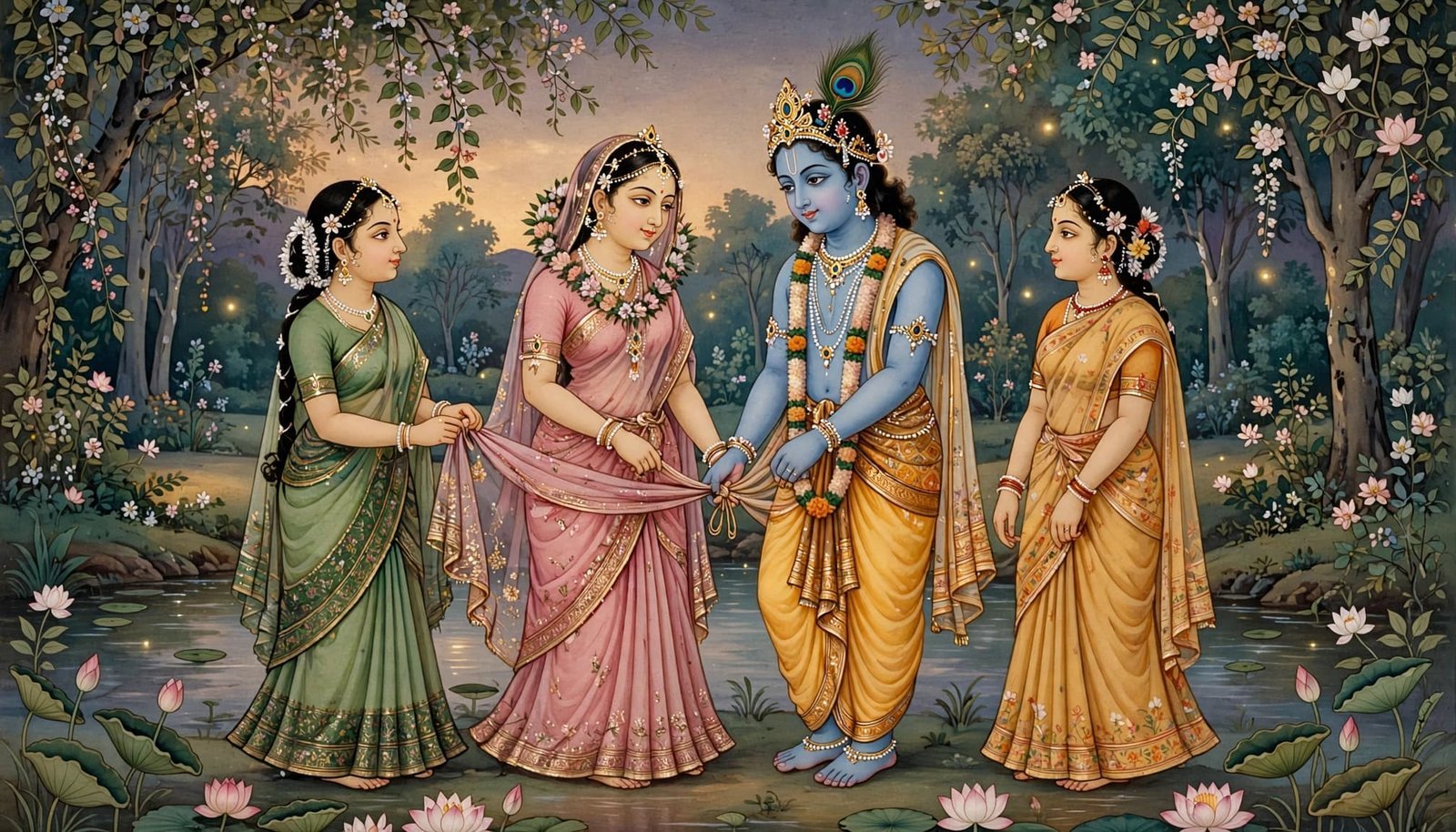
The longing discussed here is for prema, divine love. Seeing Krishna means something far more intimate than observing a form. The heart wants a relationship, and the ability to serve within it.
Sacred sound asks for our attention
Chanting, singing at mangala-arati, and offering respects can all carry a longing for loving service. Yet the mind has its own little errands.
While the words express surrender, we may be noticing a deity’s clothing, a peacock feather sitting at an awkward angle, or a yellow leaf nobody has removed. The speaker includes herself in this, with gentle humor and uncomfortable honesty.
The devotional meaning of the Maha Mantra centers on this relationship with the Divine. Repeating the names gives us a way to hear, remember, and offer ourselves.
The discussion also recalls a prayer to Vrinda Devi that acknowledges offenses and the pull of lust, anger, greed, pride, illusion, and envy. Its meaning is serious, even when our attention wanders elsewhere.
Real association reaches the heart
We receive support through spiritual teachers, devotional books, and the guidance that helps us remember Krishna. Still, we don’t always recognize it.
The speaker recalls an example from Srila Prabhupada: someone calls out to another person, receives no answer, and assumes the other person is deaf. Meanwhile, the difficulty lies with the caller’s own hearing. We can similarly overlook the help already reaching us.
Sadhu-sanga, the association of saintly devotees, involves receiving their devotional mood. Physical proximity alone doesn’t accomplish that.
One remembered exchange makes this distinction personal. The speaker had asked her teacher why some people who spent so much time beside a great devotee later opposed someone dear to him. His answer pointed to external association without entering the teacher’s inner mood.
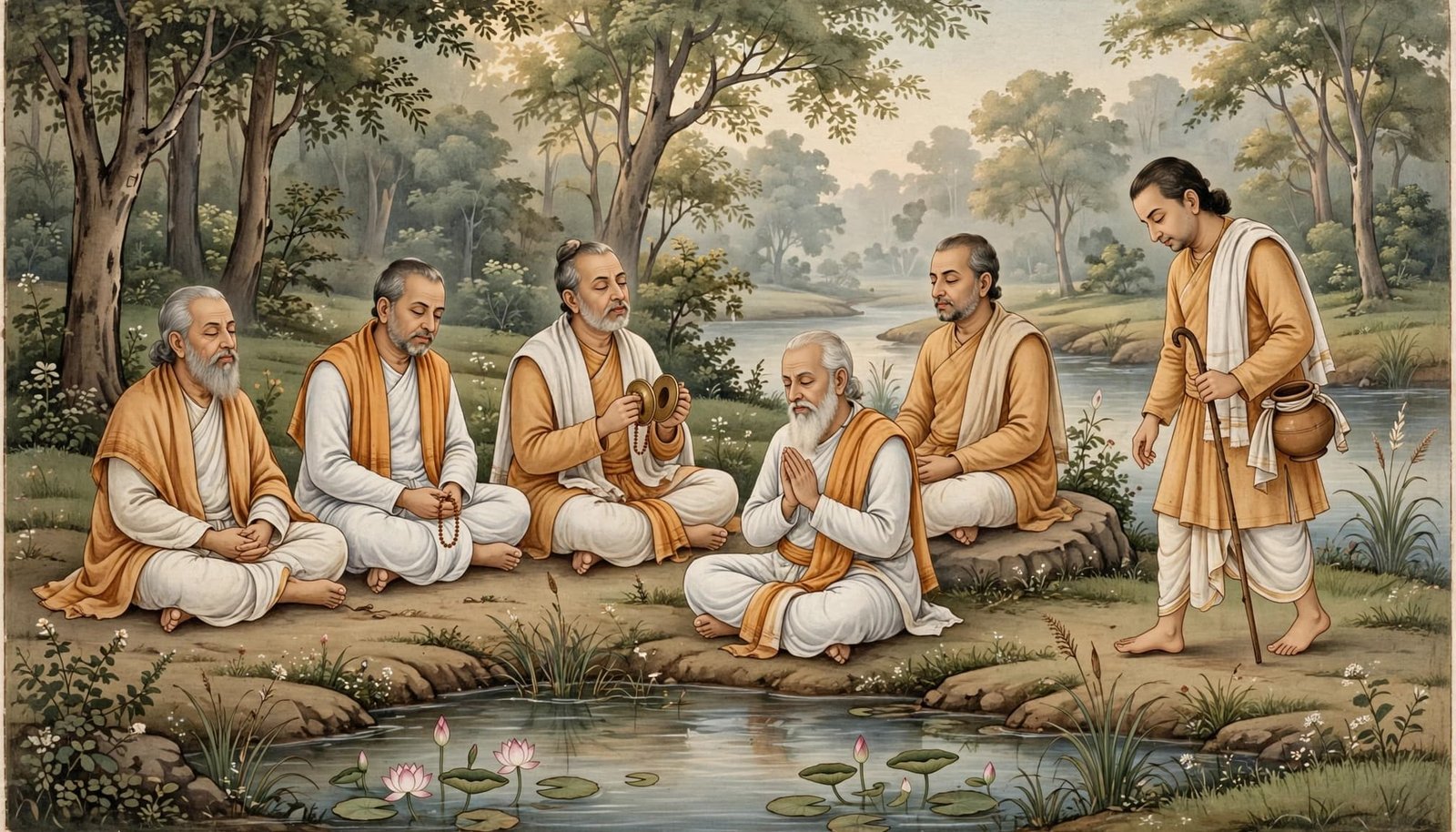
Books also offer association. Hearing can continue through reading and remembrance when we aren’t sitting together in the same room.
The things we want alongside devotion
The discussion becomes wonderfully candid when everyone considers what competes with spiritual longing.
Praise. Comfort. Personal time. Food with enough salt, but not too much. A little extra ghee.
These are familiar preferences, and the laughter doesn’t erase the point. We may want spiritual love while also holding tightly to many other desires.
The speaker remembers asking her teacher when he would reveal her spiritual form. His response connected that revelation with the moment when this became her wholehearted desire.
There’s also a careful qualification about eating and sleeping. Our bodies need both. The teaching concerns regulated habits connected with Krishna, rather than a life occupied entirely by bodily demands.
Insufficient sleep can leave someone exhausted for days. Devotional sincerity doesn’t require pretending otherwise.
Mercy doesn’t wait for perfect qualifications
The speaker gives a sobering warning: continuing the same inattentive practice for countless lifetimes cannot, by itself, produce the highest love.
Effort has a place. So do eagerness, surrender, and the mercy of devotees.
Longing for loving service cannot be replaced by the amount of time we spend outwardly practicing.
Chaitanya Mahaprabhu’s generosity offers hope here. He gives divine love without measuring everyone against a list of accomplishments or failures. The discussion describes His mercy reaching even animals and plants.
That generosity is central to the bhakti tradition’s understanding of shared chanting. In our Hare Krishna kirtan at Sacred Vedic Arts, the repeated names of Krishna and Rama carry the gathering’s devotional expression.
Our imperfections don’t have to extinguish the desire for service.
The seed of service needs good company
A question about the seed of devotion leads into a subtle distinction.
The discussion describes the soul’s inherent relationship with Krishna as already present in potential. Guru and Vaishnavas awaken the tendency to serve, and that tendency develops through devotional practice.
The speaker uses the example of a fruit seed. A mango seed contains the potential for a mango tree; it won’t eventually become a cherry tree. In the same way, the soul’s particular relationship with Krishna has its own identity.
Meanwhile, the desire to serve needs care. Faith can mature into steadiness and attachment, but the discussion repeatedly connects that growth with continued good association.
The emphasis remains relational. We receive guidance, hear the teachings, and gradually become more available for service.
Eternal relationship and changing experience
The conversation also distinguishes eternal time from material time.
In material experience, events happen in sequence. Bodies change, circumstances change, and awareness of Krishna may be absent until good association awakens it.
Eternal time has no beginning or end. Within that understanding, the soul’s relationship with Krishna remains established and ever fresh.
A bona fide guru sees both perspectives: our changing experience and our eternal spiritual identity. This helps explain how a teacher can recognize a disciple’s spiritual relationship even while the disciple is still learning to serve.
A heart that wants loving service
The discussion keeps returning to the quality of our desire. Devotional practice offers a place for that desire to grow through hearing, remembrance, and genuine association.
Krishna’s affection for His devotees gives hope to an imperfect heart. The longing is for prema-bhakti, loving devotion that wants to serve Him without another reward.

TLTRExcerpt
TLTR
Excerpt
Explore Krishna devotion through the Damodara pastime, chanting, and sadhu-sanga, with a hopeful reminder that mercy meets imperfect practitioners.
Recent Posts
Kirtan Night: Chanting and a Kartik Lamp Offering

Give Miami Day Kirtanathon: Sacred Sound and Shared Devotion
Damodara: Longing for Devotion Beyond Outward Practice
Kamyavan Pilgrimage: Krishna’s Pastimes in Braj
Remembering Srila Prabhupada at Sunday Love Feast
Categories
Share
Recent Posts