Events
Deeply Soulful Hare Krishna Chant That Takes Away All The Weight of Material Suffering
mariakerwin
July 11, 2026
Sometimes the mind has been carrying too many grocery bags for too long. Fear, unfinished plans, old conversations, the whole little parade. A Hare Krishna kirtan gives that busy mind one simple place to rest: sacred names, repeated with feeling.
This short offering from Juicy MagiK stays close to the sound. No fuss, no spiritual acrobatics, no need to arrive with a perfect voice or a perfectly tidy inner house.
A Hare Krishna Kirtan With Nothing Extra Added
At the temple of Sacred Vedic Arts, the chant is allowed to carry the whole moment. The repeated mantra is:
Hare Krishna, Hare Krishna, Krishna Krishna, Hare Hare
Hare Rama, Hare Rama, Rama Rama, Hare Hare
It comes again and again, like waves returning to shore. There is rhythm, breath, repetition, and the names Krishna and Rama. That is the entire offering, and it is plenty.
A kirtan doesn’t need to be treated like a performance. You don’t have to wait for a dramatic spiritual feeling to give attention to the sound. Some days your heart may open like a flower in warm rain. Other days you may feel like a slightly confused potato sitting in a chair. Both are welcome. The holy name can meet you where you are.

Sacred sound has this funny way of changing the atmosphere without demanding a big explanation. A room can be full of tension, distraction, or sad little thoughts, then one person sings a name for God with affection and something softens. Not because life suddenly has no problems. The laundry is still there. The bills have not floated into the sun. But the heart remembers it is not alone.
When silent meditation makes the mind noisier, a repeated sacred sound can give the attention something gentle and clean to hold.
The Mahamantra is cherished in the bhakti tradition as a prayer of calling and connection. You don’t need to understand every layer of philosophy before you begin. Let the sound arrive first. Understanding can come later, or it can sit beside you like a friendly neighbor and have a cup of tea.
For those near the temple, Sacred Vedic Arts’ weekly programming includes kirtan, wisdom talks, conversation, and blessed vegetarian and vegan food. There is something very human about that combination: sing, listen, ask a question, share a meal.
The Repetition Is the Practice
Our minds are often trained to chase the new thing. Another notification, another opinion, another small emergency in the head. Repetition can seem almost suspicious at first. “Are we saying the same words again?” Yes, dear one. That is the point.
Each return to Hare Krishna is another return of attention. The mantra doesn’t ask you to win an argument with your thoughts. It gives the thoughts a softer current to float upon. If your mind wanders during the chant, no scolding is required. Hear the next phrase. Come back. Hear the next phrase. Come back again.
This is not a contest to become the world’s most impressive chanter. There are no gold medals for looking serious while chanting. Sincerity is enough. A cracked voice is enough. Listening is enough. Even sitting with the sound in the background, while your heart slowly catches up, is enough.
Let the Chant Meet You Where You Are
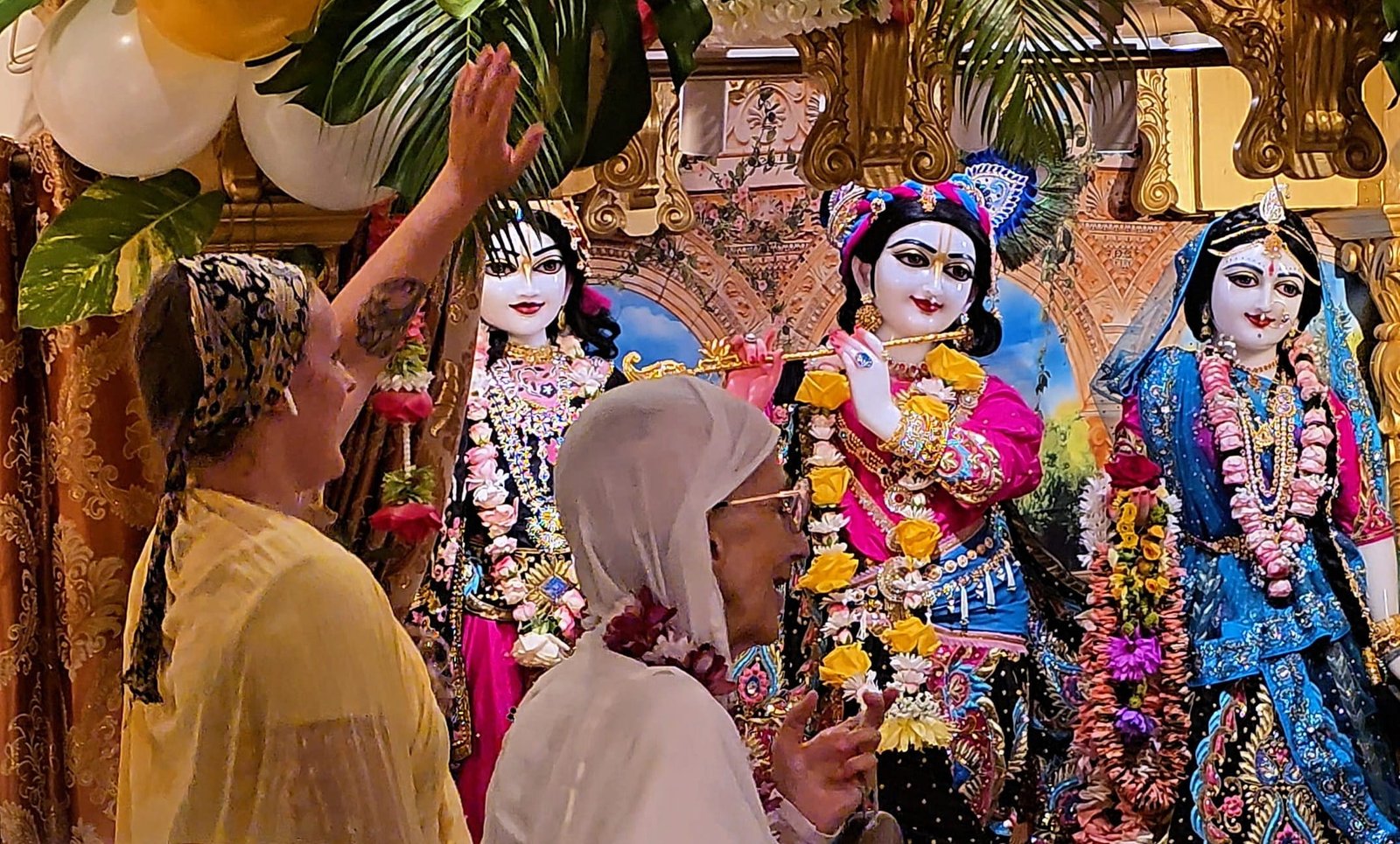
There are many ways to spend a few minutes with this video. You can let it fill the room or keep it close in your headphones. You can sing the words out loud, mouth them softly, or simply listen while the rhythm keeps you company. For another chant in the same spirit, this kirtan with Gurudevi dancing in ecstasy keeps the holy names moving.
Try one of these simple approaches:
- Put it on when the day feels too loud. Let the chant have the room for a few minutes before you rush to fix anything.
- Sing along without worrying about your voice. Kirtan isn’t an audition. It is participation, affection, and a little bit of spiritual courage.
- Play it in the background while you work or rest. The names can sit beside ordinary life, whether you are washing dishes, folding laundry, staring at an email, or taking a needed pause.
- Sit still for one refrain. Place a hand over your heart if that feels natural. Breathe. Listen for the sound, not for a grand result.
The video description speaks of presence rather than performance, and that little distinction matters. Performance asks, “How did I do?” Presence asks, “Am I here?” One question can tighten the shoulders. The other can let them drop.
People call on the Divine in many names. Krishna, Rama, Adonai, Allah, Jesus, Hari Bol, or a wordless prayer offered from the middle of a hard day. Different traditions have their own meanings, stories, and ways of worship. Still, the sincere turning of the heart is familiar across many paths. It is the movement away from the idea that money, fame, perfect security, or clever planning will finally hold us up.
A sacred name can become a daily lifeline because it is portable. No ticket required. No special outfit. No need to wait until your living room looks like a monastery, which, let us be honest, may be a long wait. You can speak or sing a name in the car before walking into work. You can repeat it in a hospital hallway, on a sleepless night, or under a wide open sky.
A Small Inner Temple, Open at Any Hour
If you would like a quieter way to listen, picture the heart as a little temple. Not a fancy temple with a committee meeting and a gift shop, just a small, living place inside. A lamp. A flower. An open window. A space where you can bring what is real.
Maybe you bring gratitude. Maybe regret. Maybe a question that has no answer yet. You can offer all of it while the mantra plays. The point is not to make yourself look polished before God. The point is to turn toward God with honesty.
In bhakti teachings, Paramatma is understood as the Divine presence in the heart. This can be a comforting thought when the inner room feels messy. Even if you have not swept the floor in a while, even if the windows seem dusty, the beloved presence has not abandoned the room. Keep sweeping when you can. Keep returning when you remember.
The chant has no need to bully you into calmness. Let it be a friend. Let it be a thread in your hand when you are walking through a foggy patch. One phrase, then the next. Hare Krishna. Hare Krishna.
The Flow of This Short Devotional Session
The chant begins at 00:00 with a heartfelt, steady refrain. There is no long introduction to get through and no detour away from the mantra. The names arrive right at the door.
By 00:19, the chant continues in that same direct spirit. Repetition is doing its patient work. A phrase returns, then returns again, and the listener has time to settle into its shape. The sound does not need to rush.
At 00:54, there is a rising flow. This is one of the sweet gifts of group chanting, even in a short session. A simple mantra can gather warmth as it continues. The words remain the same, but your listening may have changed. Perhaps the mind has loosened its grip a little. Perhaps the breath has found a more natural pace.
Then comes 01:12, a stretch of deep repetition. It is not repetition for the sake of filling time. The repeated names become the road itself. You walk by hearing. You walk by singing. You walk by letting the next line arrive.
The closing refrain begins around 01:47. Rather than adding a big ending, the session keeps faith with the same holy names. There is something tender in that. The chant leaves as it came, with Krishna and Rama on the tongue.
For anyone who wants to experience kirtan in person, Sacred Vedic Arts’ visitor information describes evenings of call-and-response musical meditation, live instruments, drumming, and a vegetarian or vegan feast afterward. A shared meal after sacred song is not a bad way to remember that spiritual life has feet, hands, hunger, laughter, and community.
No Need to Force a Certain Feeling
Some people hear a mantra and feel immediate joy. Others feel restless, bored, tender, skeptical, distracted, or all five before breakfast. There is no wrong emotional weather for listening.
Don’t make the chant carry the burden of proving something to you on command. Give it a little room. Sacred sound can be like rain after a long dusty week, but rain falls in its own time. Your job is only to be present enough to notice a drop.
If the mantra feels unfamiliar, listen to its rhythm before you try to pronounce every word. The sound can become friendly through repetition. If it already feels beloved, sing as you would call to someone you trust. Neither approach is superior. Both can be holy when they come with sincerity.
A Community Built Around Sacred Sound
These moments of chanting are not meant to trap anyone in a private little bubble. Kirtan is often a shared practice, one voice joining another, a room of people remembering something together. You can come with a question, an appreciation, a doubt, or nothing much at all except the wish to sit near good people for a while.
The Juicy MagiK Agora community portal is open for genuine questions and appreciation. Bring your real voice. No need to puff yourself up or pretend you have sorted out every mystery of the universe. Honestly, who has?
If Juicy MagiK’s devotional work has given you a bit of warmth, space, or encouragement, you can support the projects with Sats through the Juicy MagiK projects page. Small offerings have a way of joining together. A song is built from individual notes. A community is built much the same way.
Keep One Sacred Name Close
The weight of material suffering can feel enormous when you are carrying it by yourself. This Hare Krishna kirtan does not pretend suffering is imaginary. It offers another place to put your attention, again and again, until the heart has a little more air.
You can sing along, listen while you rest, or return to one refrain when the noise gets too thick. The holy name asks for no polished performance, only a willing moment.
Hare Krishna, Hare Krishna, Krishna Krishna, Hare Hare. Hare Rama, Hare Rama, Rama Rama, Hare Hare.

TLTRExcerpt
TLTR
Excerpt
Let the Hare Krishna Maha Mantra fill the room, the walk, or the quiet space inside you. Chant along and feel devotion become wonderfully simple.
Recent Posts

The Holy Names Are Like Cooling Water in the Summer Heat
One Voice, One Heart, One Beautiful Community Chant in the Park
Chant the Hare Krishna Maha Mantra and Come Home to Your Heart

Naked People, Alcohol, Mode of Passion, Boat Music, and No Peace in Miami
Transcendental Sound, Gurudevi Dancing and Devotees In Ecstasy Jumping
Categories
Share
Recent Posts