JuicyMagiK On the Go
We Saw Christ With His Arms Wide Open, So We Talked About Love (No Labels)
mariakerwin
January 3, 2026
There’s something that happens when you’re walking around a city, doing normal life stuff, and then you turn a corner and suddenly there He is, Christ with His arms wide open. Not tucked away, not hidden, not behind a doorway you have to earn your way into, just there in public, facing everybody.
That’s what hit us in San Salvador. We’re Juicy MagiK on the go, and this was one of those quick, heart-on-sleeve moments where the scene in front of you starts talking back to your conscience. Not in a scary way, more like a soft reminder you didn’t know you needed.
A Christ statue in San Salvador that feels like a public embrace
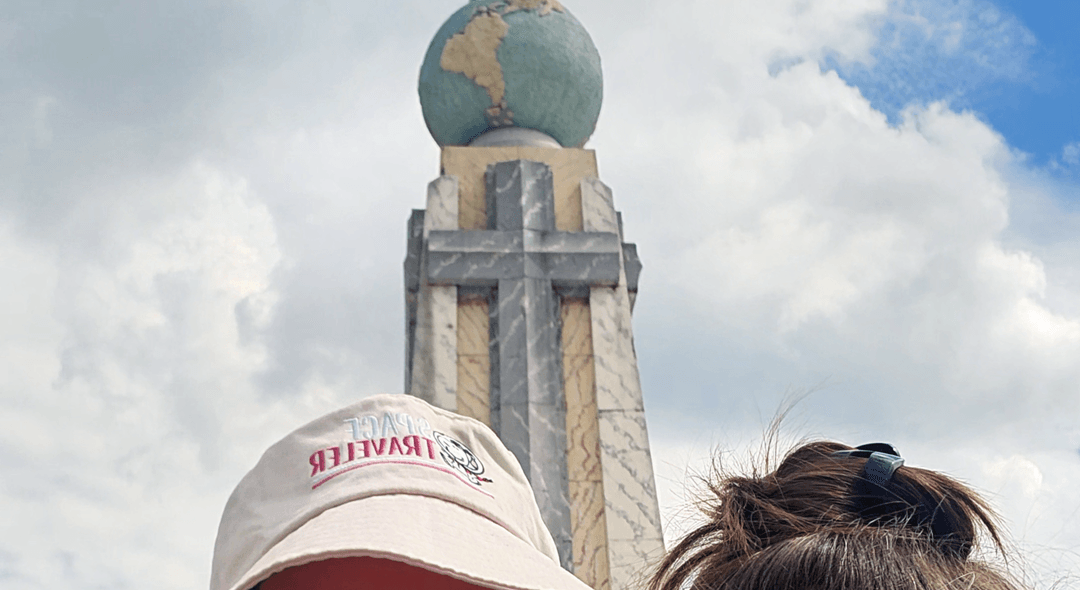
We were in San Salvador, El Salvador, standing near the famous monument people know as the Monumento al Divino Salvador del Mundo. If you’ve seen photos, you know the vibe. It’s big, it’s bright, it’s not shy.
And the thing that really landed for us was the posture. Not a clenched fist. Not a judging finger. Arms open.
It brought up that instant association with Rio, with Christ the Redeemer, the statue so many people recognize. Different place, different story around it, but the same basic feeling when you look up: “Come here. You’re included.”
That kind of image can do a lot to the heart, especially when you’re tired of everybody sorting everybody else into categories.
“No labels” love, because every living being is a child of God
Standing there, we started talking the way we talk when something real comes up. A little messy, a little overlapping, but honest.
If Christ is standing with His arms open, embracing everyone, then who are we to close ours?
We kept coming back to this simple idea: every living entity is a child of God. Not just the ones that look like us. Not just the ones that vote like us. Not just the ones that pray like us.
All of them.
And yeah, we joked around a bit because life is like that. But the point was serious:
- People with different “bodily labels,” still included.
- The ones society calls “saints,” included.
- The ones society calls “sinners,” included.
- The ones who messed up and the ones who kept trying and the ones who barely know what they’re doing, included.
That’s the whole feeling of the arms-open Christ. You don’t have to become perfect before you’re allowed to love God.
The two instructions that basically cover all of life
We said it out loud because sometimes you need to hear it plain:
Love God with all your heart, mind, your very being.
And love your neighbor.
That’s it. That’s the whole thing.
In our language, we also say “love the Supreme Being,” and we used the name Govinda too, because that’s part of our bhakti life. And we mean it in a way that’s meant to include, not to compete.
Jesus, for us, is an instructing guru (a śikṣā-guru), someone who teaches. And His teaching is not confusing. It’s actually kind of blunt, in the best way.
If you love God, it should show up in how you treat others.
Not in how clever your philosophy sounds, not in how “right” your group is, not in how spiritual your clothes are.
In how you treat others.
Loving your neighbor also includes the four-legged and the winged ones
This is where the talk got tender, because it always does.
We said, don’t discriminate against the four-leggeds. Or the winged ones. Or the thin ones. (You know, the little beings people ignore because they’re small, or inconvenient, or not “important.”)
If we’re honest, most of us don’t want harm done to our own bodies.
We don’t like being scratched. Or pinched. Or bitten. Or threatened.
And we definitely don’t want to be slaughtered.
So the question becomes really simple, even if it challenges our habits: if we don’t want harm done to us, why would we want it done to others?
That’s where we started talking about living more peacefully, including food.
Not as a trendy “diet,” not as a badge, but as a conscience thing.
A peaceful diet, a peaceful life.
The old word for this is ahimsa, non-harm, and it shows up across spiritual traditions in different forms. If you want a clear explanation of how ahimsa connects with everyday choices, including food, this piece on ahimsa and veganism lays out the idea in simple language.
We weren’t trying to police anyone. We were just saying what felt true in the moment: when your life causes less fear to other beings, your own heart gets quieter too.
Why peace creates real creativity, real friendship, real community
Here’s a thing we’ve noticed: when you stop making life a battlefield, you suddenly have space for better stuff.
That’s when real creativity shows up.
That’s when love feels less like a performance.
That’s when harmony becomes practical, not just a word on a poster.
And then, something else happens. You start to have real neighbors, real friends, real association. Not the kind where everyone is tense and trying to win, but the kind where people can breathe around each other.
This is part of why it felt “refreshing and nice” to see Christ depicted as strong, upright, open-armed. Not crushed. Not shown as an object of brutality. Just present, welcoming, dignified.
Remembering Jesus with dignity, not by glorifying suffering
This was a big part of what we talked about, and it might be the part that makes people pause.
We said we’re grateful for this statue because it presents Jesus in a way that doesn’t force us to stare at a brutal scene.
A lot of Christian imagery centers on Jesus in extreme suffering, and people have deep feelings about that, so we’re not trying to be careless here. We’re sharing the heart of what we felt standing in front of this particular statue.
We don’t want to worship demonically. Meaning, we don’t want to glorify cruelty. We don’t want suffering to become the centerpiece of devotion.
The way it came out of our mouths was basically: why would you do that to someone you love?
One of us shared something personal, raw and real: “My brother was murdered and I would never put up a picture of him lying in his blood.”
That hit hard, because it’s such a simple point.
Most people wouldn’t wear a locket of their loved one’s worst moment. Most people wouldn’t decorate their home with an image of their family member in the position of their death.
So we asked, kind of quietly but also kind of loudly: what we wouldn’t do for our family members, why are we doing it for the son of God?
The cross as a symbol, and the discomfort some people feel
We also said something specific: that the cross is a violent symbol, and that it wasn’t the main representative symbol of early Christians (at least not in the way it later became).
If you want background on how the cross developed as a Christian symbol over time, Britannica’s overview of the cross in Christianity and history gives a straight, reference-style explanation.
Our point wasn’t to argue history in the street.
Our point was emotional and devotional: we don’t want to “glorify the murder,” and we don’t want remembrance to get stuck on the worst frame of the story.
There’s a way to remember Jesus that keeps the love front and center.
A Christ with open arms does that.
A Christ inviting the whole world in does that.
And for us, standing right there in San Salvador, that felt like the message: mercy, welcome, keep trying, keep loving.
“We’re all… trying,” and that’s part of the message too
Another thing that slipped out in the talk, and it was imperfect, but it was honest, was this idea that we’re all a mix.
Some days you look saintly, some days you don’t.
Some days you’re disciplined, some days you’re defensive.
Some days you love cleanly, some days you love with conditions.
So the reminder wasn’t, “Become flawless.”
It was, “Let’s try our best to be saintly.”
Let’s keep turning toward love. Let’s keep turning toward God.
And if we’re going to be strict about anything, maybe be strict about not being cruel. Be strict about not dehumanizing people. Be strict about not turning life into “us versus them.”
A moment of blessings, many languages, one wish
We wrapped the moment the way you wrap a moment like that, with blessings.
Peace be with you and upon you.
Namaste.
Merry Christmas.
Happy New Year.
Shalom.
Salam.
Different words, same hope: may you be safe, may you be guided, may your life soften into love.
That’s one of the sweet things about interfaith moments when they’re not competitive. You hear how many cultures keep reaching for the same thing, peace, mercy, friendship with God, kindness to each other.
On-the-go life: “Let’s walk,” and next stop, the library
And then, because this is real life and not a staged scene, we were like: okay, let’s go. Let’s walk.
The moment ended the way travel moments end. You’re standing there, you’re talking about God and love and how to treat living beings, and then your body remembers you’re mid-day in a city and you’ve got places to be.
Next stop was the library.
Not dramatic, not mystical, just human. Sacred thoughts, ordinary steps.
Staying connected with Juicy MagiK (if you want to)
If you’ve got a genuine question, or you just want a place to connect, Juicy MagiK has a community portal at Juicy MagiK Agora registration. There’s also a page for supporting their work at Juicy MagiK projects.
Conclusion: Keep your arms open too
That statue in San Salvador is still doing what it does, standing there with Christ’s arms open, quietly preaching to everybody rushing past. The takeaway is simple and it’s hard, in the normal way that simple things are hard: love God with your whole being, and love others like you love yourself.
When you’re about to label someone, pause. When you’re about to harm, pause. When you’re about to worship through suffering, pause and ask what dignity looks like.
And then, yeah, keep walking. Toward the library, toward your next errand, toward your next conversation, but with a softer heart. The world has enough clenched fists. It could use a few more open arms.

TLTRExcerpt
TLTR
Excerpt
Jesus with arms wide, Govinda on the heart, Shalom and Namaste, peace for every being, choose mercy and live a peaceful diet that harms no one.
Recent Posts
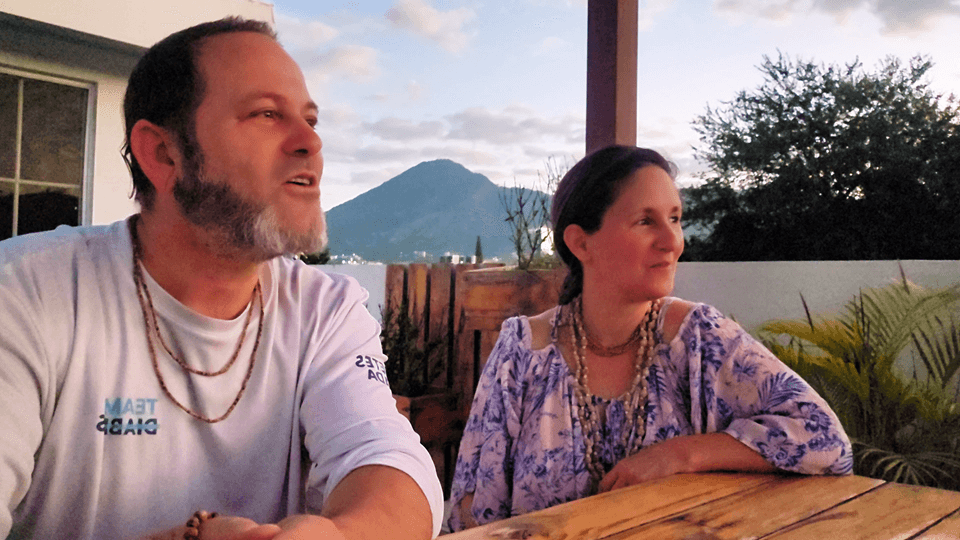
Last Night in San Salvador: Christmas Blessings, Winter Solstice & Chanting With a Sweeter Mood
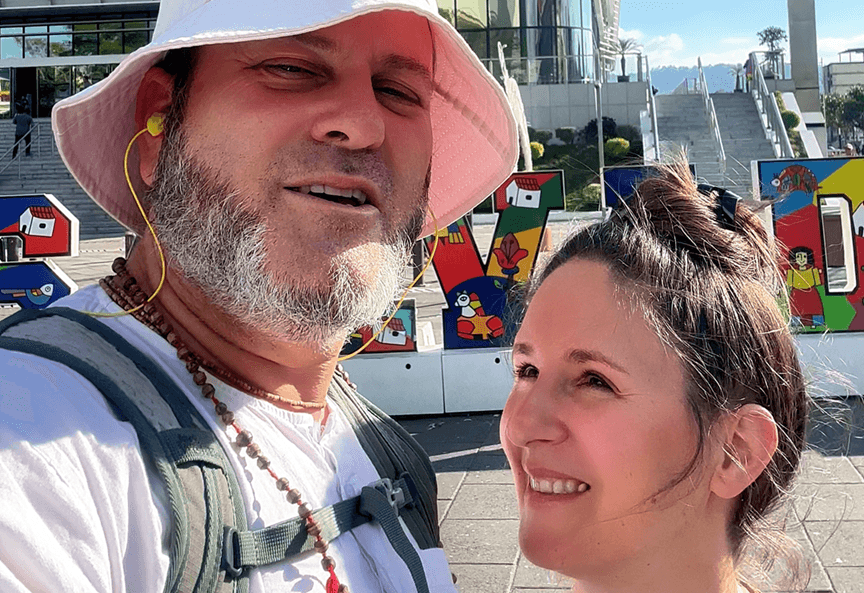
We found El Salvador’s National Library, Then The Cathedral Pulled Us In
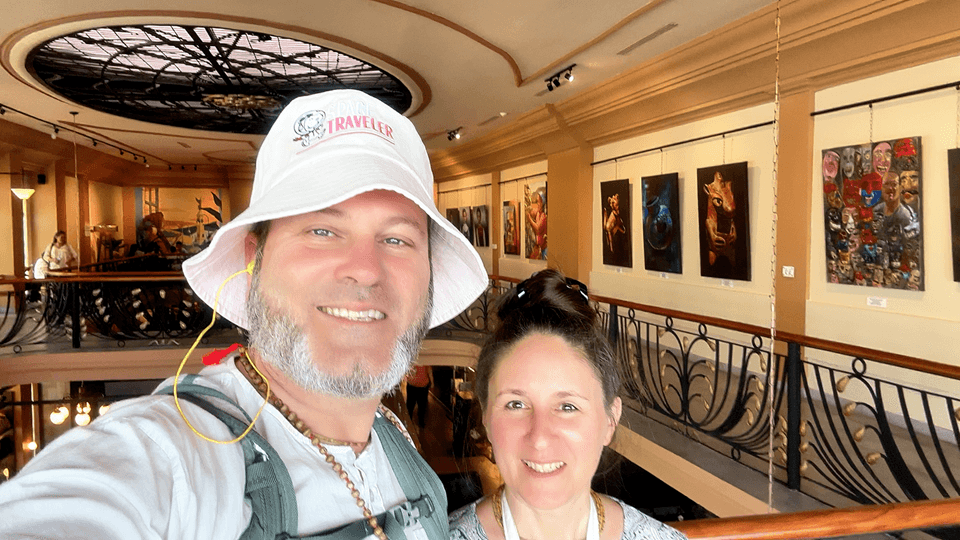
Our Tiny San Salvador Video Turned Into a Whole Blessing (Starbucks Changas and All)
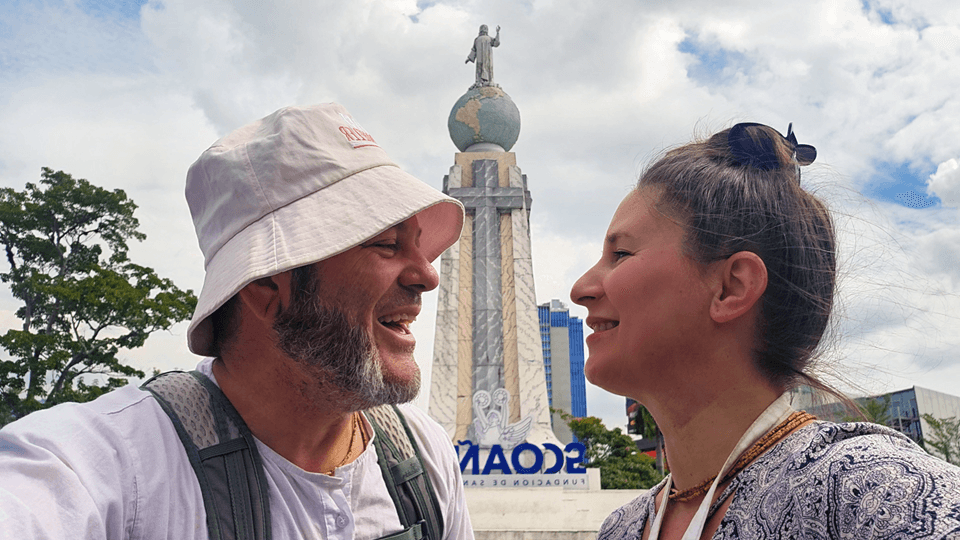
We Saw Christ With His Arms Wide Open, So We Talked About Love (No Labels)
Force Isn’t Faith: Why Real God Talk Stays Gentle
Categories
Share
Recent Posts