Sacred Vedic Arts
Sometimes the mind feels like a room with too much old furniture in it. Worries, anger, plans, memories, the news, or somebody else’s opinion from 2007 can clutter our headspace. Then a roomful of people begins to participate in kirtan, and suddenly there is space again. This traditional form of chanting acts as a reset button for the soul.
This Friday night gathering with Sripad BV Vana Maharaja offered a truly profound spiritual experience for everyone in attendance. The atmosphere was sweet, lively, and full of Hari Bol. The message was simple enough to hold in two hands: come together, chant, hear, and let the heart be cleaned.
Key Takeaways
- Kirtan as a Reset: Kirtan acts as a spiritual reset button, helping to clear the mind of anxieties, distractions, and accumulated negative emotions like pride and envy.
- Accessibility of Bhakti: The practice of congregational chanting (Sankirtan) is open to everyone regardless of background, singing ability, or spiritual experience; it invites participants to come as they are.
- The Power of Association: Sadhu sanga, or associating with saintly people, is essential for spiritual growth, as it helps shift one’s focus from mundane attachments toward the divine.
- Gradual Purification: Spiritual progress is a step-by-step process of purification rather than a race, where consistent chanting and hearing slowly reveal the soul’s original, loving nature.
- The Living Name: The holy name is a tool that can be engaged with at any time, serving as a constant source of shelter and a way to soften the heart amid the challenges of daily life.
Kirtan Is Personal, Sankirtan Is Shared
Kirtan is a beautiful practice focused on the glorification of Krishna. When we engage in Sankirtan, we are participating in congregational chanting, where many voices and hearts unite into one holy sound. The Sanskrit phrase shared during the evening was sarve militva kirtanam iti sankirtanam, which refers to kirtan performed by everyone gathered together. Often taking the form of call and response, this style of devotional singing invites everyone to participate regardless of their background.
There is something tender about this. You do not need to arrive polished. You do not need a perfect singing voice, a perfect meditation cushion, or a special spiritual outfit. You come as you are. Maybe you clap on the wrong beat for a minute. Maybe your mind runs off to the snack table. No problem. Come back to the name.
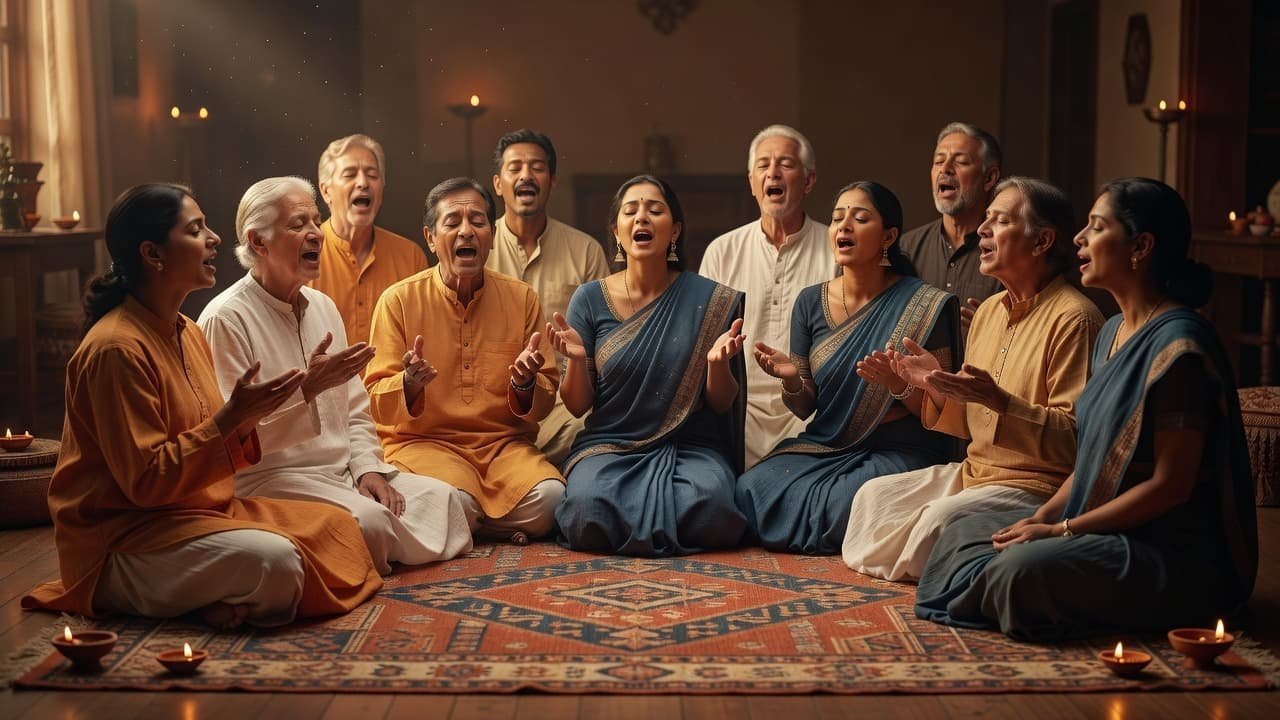
The Hare Krishna Mantra was sung again and again:
Hare Krishna, Hare Krishna, Krishna Krishna, Hare Hare
Hare Rama, Hare Rama, Rama Rama, Hare Hare
Sripad Vana Maharaja spoke of kirtan as the practice especially given for Kali-yuga, this age where people are often distracted, tired, confused, and a bit lost. Other paths may ask for abilities most of us do not have. But the holy name is close. You can speak it, you can sing it, or you can simply listen. As a primary practice within Bhakti yoga, this path is accessible to all, a theme echoed in the Bhagavad Gita and widely practiced within Hinduism.
Chaitanya Mahaprabhu’s first verse of the Sikshashtakam begins with ceto-darpana-marjanam, the cleansing of the mirror of consciousness. As a core teaching of the Bhakti movement, we learn that the heart is like a mirror, but it gets dusty over time.
- Greed can settle there.
- Anger can settle there.
- Pride, envy, and old resentments can settle there too.
- The holy name is the cloth that keeps wiping.
The teaching is not that you should hate yourself for having dust. We are all walking around with a little dust. Chanting is how we remember what is underneath it.
Sadhu Sanga Changes the Direction of a Life
The evening kept returning to sadhu sanga, the company of saintly people and sincere devotees. In bhakti, association matters. Sanskrit terms like sadhu sanga help us categorize these important associations that shape our character. Who are you sitting with? What are you listening to? What kind of song is entering through the ears and taking up space in the heart?
Hari-katha, which involves hearing about Krishna and the Divine world, is not treated as ordinary talk. Maharaja explained that when we hear Hari-katha with faith, Krishna enters through the ears and begins clearing unwanted things from within. It is a lovely thought. The ears are not only for noise. They can become a doorway home.
Then came the little story of the bumblebee and the dung beetle. It is one of those stories that sounds funny at first, then catches you right in the chest, serving as a powerful lesson in meditation and focus.
A black bumblebee was flying above a place where cows had left their dung. The dung beetle, perfectly at home there, asked where the bee had come from and what he was singing about.
The bee said, “I have come from Mansarovar.”
The beetle had never seen such a place. When the bee described clear water, flowers, fruit trees, birds, bees, and peacocks, longing woke up in him. He wanted to go, but he had no wings.
The bee said, in effect, “Sit on my back.” It was an invitation for the soul to leave its familiar, narrow surroundings for a higher state of being. Better than any airline, and no tiny packet of peanuts.

Mansarovar was described as a place of startling beauty, its water clear as crystal, with lotuses floating on the surface and blossoms falling like colors at Holi. The point was not travel brochures, bless them. The point was what happens when we hear of a beautiful holy place. A hunger can come. Not the hunger for another thing to own, but a hunger to go closer to Krishna.
Vrindavan, Ratha Yatra, and the Mercy of Guru
That longing becomes especially strong in descriptions of Vrindavan. Maharaja spoke of Krishna and his flute, the peacocks dancing, the Yamuna flowing, and the trees of Vraja seeming to sing Radhe, Radhe. In this mood, Vrindavan is not a far-off postcard. It is the place where every leaf and bird is turned toward Sri Radha and Krishna.
When the sounds of a soulful bhajan or kirtan fill the air, the rhythmic accompaniment of musical instruments like the harmonium helps the mind focus on the divine. The teachings say hearts melt when we chant the Hare Krishna mantra, and tears come. The body may tremble or get goosebumps, called romancha. These are not party tricks or things to chase after. They are signs described in the tradition when love for God becomes overwhelming.
The talk also touched on the Jagannath Ratha Yatra. Once a year, Lord Jagannath comes out from His temple in Puri for darshan. It was through the efforts of Srila Prabhupada and the International Society for Krishna Consciousness that this beautiful festival and the chanting of the holy names became known to people all over the world. In the inner mood of Sri Chaitanya Mahaprabhu, the journey is Krishna returning from Dvaraka to Vrindavan, where the gopis long to bring Him back, much like a devotee longs for the mercy of Rama.
And then there was Lord Shiva, honored as guru-tattva, the principle of the spiritual guide. Maharaja spoke of Gopeshwar Mahadeva, Lord Shiva in Vrindavan, and the need for his shelter before entering the intimate worship of the rasa-sthali. No one gets to demand entry into divine love. We come with humility, permission, and a servant’s heart.
In the story, the dung beetle rested inside a lotus. A princess gathered that lotus on Shivaratri and offered it among 108 lotuses to Lord Shiva. Later, when the lotus opened in the Ganges, the beetle drank the sacred water, gave up his old body, and received a transcendental form.
It is a wild little tale, and also rather clear:
- The beetle begins in a place of bad smell and small desires.
- The bumblebee gives him saintly association.
- The lotus carries him to an offering at the feet of Shiva.
- The Ganges water brings purification and a new spiritual identity.
We may not be dung beetles, though some Tuesdays do raise the question. Still, the comparison lands. We are attached to things that do not smell so nice to the soul. Good association takes us somewhere else.
Bhakti Grows Step by Step, Not All at Once
Bhakti yoga has a natural unfolding. It is not a race, and it is not a performance for anybody watching. Faith comes, then association, then practice. Over time, the heart gets clearer and love becomes more steady as the practice purifies the soul.
| Stage | Simple meaning |
|---|---|
| Shraddha | A beginning faith |
| Sadhu sanga | Keeping company with saintly devotees |
| Bhajana-kriya | Taking up devotional practice |
| Anartha-nivritti | Unwanted habits begin to fall away |
| Nishtha | Steadiness |
| Ruchi | A genuine taste for bhakti |
| Asakti | Loving attachment to Krishna |
| Bhava | Spiritual feeling awakens |
| Prema | Pure divine love |
The path asks for care with offenses, especially offenses to the holy name, the holy dham, service, and devotees. Maharaja spoke of chanting the mantra without offense, not as a heavy threat, but as a tender reminder. Unlike silent meditation, chanting out loud is a vibrant, communal engagement. Respect people. Do not use sacred things for ego snacks. Keep the heart soft. This practice of singing holy names is also central to other traditions like Sikhism, highlighting its universal appeal.
Sri Chaitanya Mahaprabhu gave the famous mood for steady chanting: be humbler than a blade of grass, more tolerant than a tree, offer respect to others, and do not chase your own name, fame, or reputation.
That is a lot to practice before breakfast. But no one said we have to finish it by Tuesday.
There are no strict limits on when to chant. Say the names while making tea, walking, resting, eating prasadam, or lying down at night. Let the last sound before sleep be Hare Krishna, and let the mind wander toward the Yamuna instead of the usual strange late night cinema.
Frequently Asked Questions
Do I need to be a talented singer to participate in Kirtan?
No, you do not need a perfect singing voice or any specific musical talent to join in. The focus is on the sincerity of your heart and the act of coming together to glorify the divine rather than performing for an audience.
What should I expect if I attend a Kirtan gathering?
You can expect an inclusive and welcoming environment where you sit with others to sing the Hare Krishna mantra in a call-and-response format. Participants often clap, sway, or simply listen, and it is common to share a meal together afterward in a spirit of community.
Can I practice Kirtan on my own, or must it be done in a group?
While congregational chanting (Sankirtan) provides the profound benefit of group association, you can certainly chant the holy names on your own at any time. Whether you are cooking, walking, or resting, the practice is flexible and can be integrated into your daily routine to keep your mind focused on the divine.
How does chanting help clear the mind?
The tradition teaches that our consciousness is like a mirror covered in dust, such as greed and anger, and chanting acts as a cloth that wipes away these distractions. By focusing on the holy name, you create space for spiritual peace and replace mundane thoughts with a connection to Krishna.
The Holy Name Makes Room for Love
The Friday night gathering ended as these evenings often do, with more congregational chanting, more Hari Bol, and calls of Jaya Radhe. The room was filled with gratitude for the guru and Vaishnavas, while a shared meal waited in the back. Joy, unity, and surrender were not abstract ideas in that room. Through the power of call and response, they were sung out loud.
Kirtan does not erase every hard thing in life. The street can still be hot, and the mind can still be noisy. But the holy name gives the heart somewhere soft to land.
Come as you are. Sit with good people. Engage in devotional singing by chanting one name of God with sincerity, then another. In these final moments, the atmosphere hummed with the divine love found in every melody.

TLTRExcerpt
TLTR
Excerpt
At a Friday kirtan with Sripad BV Vana Maharaja, discover how the Hare Krishna mantra and saintly company can soften the heart.
Recent Posts

Remembering Srila Prabhupada Among the Trees On His Appearance Day
A Dying Squirrel Heard the Hare Krishna Maha-Mantra
When Coyotes Join the Hare Krishna Maha Mantra Chant

Can Rabbits Hear the Hare Krishna Maha Mantra? One Evening Chant in Southern Ontario

We Chanted With Seals, Then Nearly Burned Our Toes
Categories
Share
Recent Posts