Sacred Vedic Arts
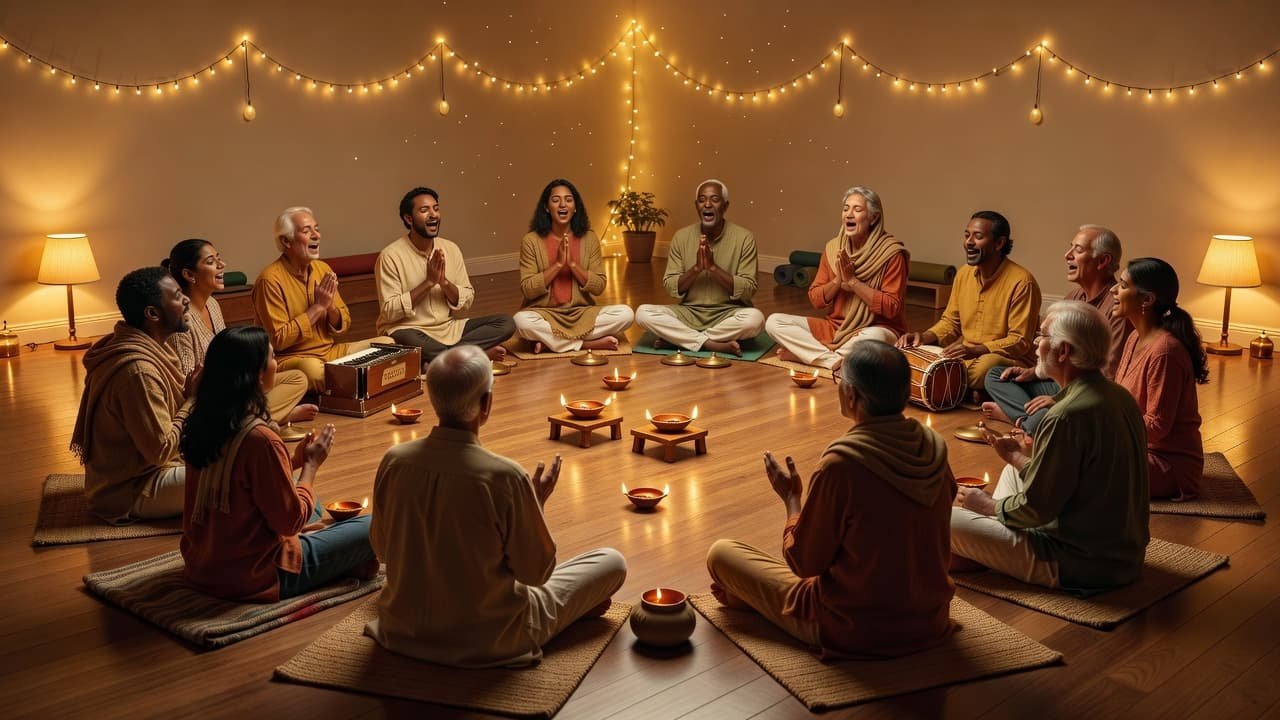
Some Friday nights ask for noise, screens, and a little bit of forgetting. This one made room for something else: the holy names, sung as a rhythmic mantra again and again until the room became one big breath of Kirtan.
You don’t have to know every word to feel the invitation. Come close, listen, and let this form of active meditation help the mind loosen its grip for a minute.
Key Takeaways
- Active Meditation: Kirtan is a participatory practice where the collective sound of the mantra helps quiet the mind and foster a sense of inner peace.
- Shared Devotion: The practice emphasizes vulnerability and community over performance; you do not need to be a skilled singer to join, as the group carries the melody.
- The Power of Feeling: The Divine is moved by the sincerity of the heart’s offering rather than the perfection of the performance or material gifts.
- Integrating Practice: Kirtan extends beyond the gathering, encouraging practitioners to incorporate mantra chanting, small morning offerings, and acts of service (seva) into their daily lives.
A Room Held Together by Sound
The evening moved through long, joyful waves of chanting that seemed to fill every corner of the space. Voices called out, while musical instruments like the harmonium kept the steady pulse of the room. Bells rang clearly, and the melody kept returning like a friendly little bird that knows its way home, a tradition rooted deep in the history of Hinduism.
The sacred Hare Krishna Mantra is:
Hare Krishna, Hare Krishna, Krishna Krishna, Hare Hare
Hare Rama, Hare Rama, Rama Rama, Hare Hare
Kirtan is not a performance where a few people do it right and everyone else watches; it is a fully participatory experience. Sometimes you sing confidently, and other times you might only catch the refrain before losing your place. This is perfectly fine, as the collective sound carries you along. Kirtan thrives on this shared vulnerability.
As the melodies build, the call and response interaction between the lead singer and the group creates a rhythm that can become fast and bubbling over. Then, it softens again. A bell rings. Someone calls “Hari Bol,” and the whole room answers in unison. There is such sweetness in that exchange. You do not need to sort out your entire life before you walk into a circle; you simply use this ancient mantra to arrive with the mind you have, the week you have had, and a willing piece of your heart.
Calling to the Divine With Feeling
During the gathering, the speaker offered a simple doorway into the mantra’s meaning. Hare was described as calling to Radha, the divine feminine, while the Divine masculine is represented by the names Krishna and Rama. When we chant Krishna, we are inviting the presence of the Supreme, and when we call out the name Rama, we are invoking the source of all joy.
It is a call, not a complicated mental exercise. A calling out. Like when you are lost in a crowded place and suddenly hear the voice of somebody who loves you.
The speaker also reflected on a Sanskrit teaching about the mood of devotion. The point was tender and clear: the Divine isn’t hungry for our money, our food, or our impressive outer things. The Divine receives the feeling behind the offering.
That changes the texture of daily life a bit, doesn’t it? Through the practice of Bhakti yoga, a cup of tea can be offered. A meal can be offered. The tired little prayer you whisper before sleep can be offered. Even the messy feelings can be brought close.
The offering is not only the thing in your hands. It is the heart you place inside it.
A Bhagavad Gita verse was also mentioned, man-mana bhava, a reminder to keep the mind turned toward Krishna. Not in a stiff, exhausting way. More like remembering someone dear throughout the day.
A Small Morning Offering
When you wake up, before the phone gets its little claws into your attention, try something gentle:
- Sit up and remember the connection between the Divine and the soul for a moment.
- Offer the coming day, including the parts that already feel difficult.
- Chant the maha mantra aloud or under your breath.
- Let gratitude be simple, even if it is only, “Thank you for another morning.”
No need to make it glamorous. Devotion can be quite ordinary. That is part of its beauty.
Hari Bol, Gurudeva, and the Joy of Being Together
The evening honored our teachers and the long line of spiritual guidance with chants for Gurudeva and Srila Prabhupada. As the founder of the International Society for Krishna Consciousness, Srila Prabhupada brought these timeless traditions to the West, and his presence is felt whenever we chant. These names traveled through the music with affection, gratitude, and a lot of happy repetition. “Jaya Gurudeva.” “Jaya Prabhupada.” “Hari Bol.”
“Hari Bol” is a call of joy, an encouragement to sing the names of the Divine. This tradition of congregational chanting was popularized by Chaitanya Mahaprabhu, who sparked the Bhakti movement five centuries ago. It is a practice built on sacred sound, a concept that resonates deeply with the spirit of kirtan and finds beautiful parallels in the musical devotion of many traditions, including the importance of kirtan in Sikhism. In a room full of people, this call feels like a collective affirmation to keep going. No lectures are needed; the room simply understands.
There was a lovely invitation for people to come closer, especially those joining for the first time. That inclusion matters. Spiritual spaces can sometimes feel exclusive, but a warm kirtan says otherwise. Sit down, follow the rhythm, and let the others hold the melody until it becomes familiar.
The communal sound has its own kindness. When your attention is scattered, you can hear another person singing beside you. When your voice is timid, there are twenty more voices around it. The mantra becomes a shared place to rest, proving that the heart of the Bhakti movement is found in the joy of being together.
Prasad, Service, and Keeping the Space Alive
After the final notes of the Kirtan faded, the evening transitioned into a very human, very holy ritual: dinner, dishes, serving, and cleanup. Sharada prepared prasad for the evening, and everyone was invited to the kitchen to partake.
Prasad is more than just food served after an event. It is sustenance offered with devotion and shared within the warmth of a community. After the communal devotional singing, eating together feels like a natural extension of the practice. The body gets fed as well as the spirit, and God is certainly not offended by dinner.
This holistic spiritual experience extends beyond the music into the practical needs of the group. The livestream setup is about 75 percent of the way through an audio upgrade, with better microphones planned so people joining from home can hear the chanting clearly. Anyone wishing to help financially with these improvements was invited to contact the group by direct message or email.
There was also a call for helping hands. At least three people were needed to assist with serving, and more volunteers were needed for cleanup, with Tulsi coordinating the efforts.
This is seva, or loving service. It can look like carrying plates, wiping tables, taking out rubbish, or simply staying behind when everyone else is drifting toward the door. It may not be flashy, but it is deeply sacred work that maintains the environment for everyone.
A Weekend of Bhakti and Yoga
The announcements carried the energy of the Friday night Kirtan forward into the weekend. A Bhakti yoga class was scheduled for 9:00 a.m. the following morning, which also fell on International Yoga Day, June 21.
There was mention, too, of an upcoming India journey. Anyone curious about joining was encouraged to speak with a member of the community. In addition to these offerings, the group discussed an upcoming session focused on traditional Bhajan, serving as a peaceful companion practice to the intensity of the Friday night event.
These things fit together more naturally than they might seem. Kirtan gives the heart a voice. Yoga gives the body a place to breathe and bow. A shared meal gives people time to know each other beyond the chant. Then someone washes a pot, somebody else stacks chairs, and love has feet.
Frequently Asked Questions
Do I need to be a good singer to participate in Kirtan?
Not at all. Kirtan is a communal, participatory experience where the goal is shared devotion rather than a perfect musical performance. You are encouraged to simply join in as you are, letting the collective voices support you.
What does the Hare Krishna mantra mean?
The mantra is a call to the Divine, invoking the names of the feminine (Radha) and masculine (Krishna and Rama) aspects of the Supreme. It serves as an invitation to presence, joy, and spiritual connection rather than a complex mental exercise.
Is Kirtan only about singing?
While singing the holy names is the core of the practice, the spirit of Kirtan extends into daily life through Bhakti yoga and acts of service known as seva. This includes simple rituals like offering your morning, sharing a meal with the community, or helping with the practical needs of the space.
Let the Chant Follow You Home
A Friday night kirtan does not have to stay inside the four walls where it happened. The sound can follow you into the car, into the kitchen, and even into the slightly grumpy Saturday morning. By continuing your daily practice of chanting and meditating on the mantra, you anchor the peace of the event in your everyday routine.
The strongest teaching of the evening was this: bring your feeling. You do not need a perfect voice, a perfect offering, or a perfect spiritual mood. Start with the small, honest bit of yourself that is ready to call out, and let the Divine and the power of those holy names meet you wherever you are.

TLTRExcerpt
TLTR
Excerpt
Join a welcoming kirtan meditation and chant the Hare Krishna mantra together. Discover how shared sacred sound brings devotion into daily life.
Recent Posts

Remembering Srila Prabhupada Among the Trees On His Appearance Day
A Dying Squirrel Heard the Hare Krishna Maha-Mantra
When Coyotes Join the Hare Krishna Maha Mantra Chant
Can Rabbits Hear the Hare Krishna Maha Mantra? One Evening Chant in Southern Ontario

We Chanted With Seals, Then Nearly Burned Our Toes
Categories
Share
Recent Posts