JuicyMagiK On the Go
Force Isn’t Faith: Why Real God Talk Stays Gentle
mariakerwin
January 2, 2026
A beautiful statue of Lord Jesus Christ can stop you for a second. Not in a heavy way, not in a guilt way, just in that quiet way where your heart goes, oh yeah, love is real, mercy is real, and I probably don’t need to argue with anyone today.
And that’s the whole vibe here: faith without force. No pushing, no threats, no “you better believe what I believe,” no holy bullying dressed up as “conviction.” Just gentle God talk, real peace across traditions, and a simple reminder that free will matters.
Jesus, the “Savior of the World,” and what we’re being saved from
When people call Jesus “the savior of the world,” it raises a fair question. Saved from what?
One answer offered here is blunt and kind of refreshing: saved from ignorance. In the Vedic framing, that ignorance is avidya, and it shows up as getting lost in maya, the spell of the temporary. Then it gets even more practical, because “temporary” often looks like money, status, comfort, and control. In the Bible language, that pull is “mammon.”
That’s why the “two masters” line lands so hard. It’s not cute, it’s not poetic, it’s a warning and a compass:
- You can love and serve God.
- Or you can love and serve mammon.
- But you can’t pretend you’re neutral about it.
The verse often quoted for this is Matthew 6:24, and it doesn’t leave much wiggle room. The point is not to shame anyone for having a job or paying rent. It’s about the heart’s center. What is really running your life, your worship, your daydreams, your fears?
And no, there’s no “Switzerland” option, no safe little mental zone where you get to avoid the choice and still call it spiritual. (Also, the joke lands: Switzerland isn’t neutral anyway, the whole “neutrality” thing is a myth.)
Where faith turns dark: violence, force, and “holy pressure”
This is the line in the sand. Wherever there’s violence or force used to promote so-called faith, that’s not devotion. That’s ignorance at its darkest.
If someone is trying to “convert” through threats, intimidation, humiliation, or physical force, that has to be rejected. Full stop.
And it doesn’t matter what banner it’s under.
If someone is cruel “for Jesus,” cruel “for Allah,” cruel “for Krishna,” that cruelty doesn’t become holy because it borrows a holy name. It stays cruelty.
There’s also a humility tucked into this that matters: no one speaking is claiming to be the Supreme Being. And you’re not either. So the posture is, here’s what we’ve received, here’s what we practice, take it or leave it. Real love doesn’t need coercion.
Don’t be sectarian, don’t be fanatical (seriously, it’s not cute)
It’s easy to fall into “my team is right, your team is wrong.” It can even feel like you’re defending God. But that kind of sectarian mood does something sneaky. It hardens the heart, and once the heart gets hard, people get hurt.
So the call is simple:
Don’t be sectarian. Don’t be fanatical.
If your religion makes you sharp, rude, and pushy, something went off track. If your practice makes you more peaceful, more patient, more respectful, you’re moving in the right direction.
And the energy here is family energy: we’re on the same team. Same human family, same Divine source, same need for mercy. Family fights happen, sure, but nobody wants to live in that vibe forever. It “sucks,” as the talk says plainly.
Everyday interfaith peace: say it back, and mean it
One of the most practical parts of the message is about greetings. The tiny daily moments where you can either build a bridge or start a fire.
If someone greets you with peace, just return peace.
Salaam alaikum? Say it back.
Shalom? Say it back.
Peace be with you? Say “and also with you.”
Namaste? Namaste.
Not as performance. Not as “look at me, I’m open-minded.” Just as a real recognition: I see your humanity, I honor your wish for peace, I’ll meet you there.
If you want background on how these greetings connect across the Abrahamic traditions, this short piece on an interfaith greeting of peace (shalom, shlama, salaam) captures the shared roots in a simple way.
And there’s a sweet detail here too: say it twice. “Shalom, shalom.” Complete peace. It’s a small thing, but small things change the temperature of a room.
“Happy Holidays” vs “Merry Christmas,” and what the argument is really about
There’s a moment of calling out a modern habit: when someone says “Merry Christmas,” why answer with “Happy Holidays” like you’re dodging something?
The point being made is not a rant against other holidays. It’s more like, why reject a beautiful prophet, a beautiful teacher, a sacred figure that has helped millions soften their hearts?
So the invitation is to keep it simple: if someone says “Merry Christmas,” you can say “Merry Christmas” back. You don’t have to turn it into culture war. You don’t have to turn it into a statement. You can just bless them.
And that rolls right into a bigger point: don’t be atheistic in the sense of rejecting the Divine altogether, because (in this view) that road leads to misery. The alternative offered is theism and theology, and even theosophy, meaning the honest attempt to ask:
- Who is God?
- What is God?
- Who am I?
- What is my relationship with the Supreme?
No force needed, just sincerity.
Labels are temporary, the soul isn’t
Another theme that keeps coming up is that these religious identities are often labels. Important, yes, but still temporary.
There’s a bold statement made: we’ve lived so many lives, we’ve been Muslims, Christians, Hindus, everything. The point is not to blur traditions into mush. It’s to loosen the ego’s grip on “my side,” and remember that underneath the label is a living being trying to get home.
That “home” is described as the shared longing behind so much human effort: we all want to be happy. We all want peace. We all want to return to the Supreme.
When you take that seriously, you start treating people like relatives instead of enemies.
Free will is real, so stop trying to play God
One of the sharpest lines is also the simplest: God lets everyone do what they want. That’s part of why this world exists. People can accept, people can reject, people can wander, people can come back. That’s the setup.
So if God allows freedom, who are we to deny it?
Trying to control someone’s conscience is framed here as a kind of anti-God posture. Not just “wrong,” but spiritually upside down. The talk uses strong language for it, calling it satanic behavior, because it’s the urge to override God’s design and dominate others.
The flip side is beautiful: be like the Supreme. Be merciful. Be patient. Be steady.
There’s also a Christian reference that fits: Jesus says to be perfect as your Father is perfect, understood here as oneness in spirit. Not “I become God,” but “I become godly,” meaning you reflect divine qualities in small measure. More kindness, more truth, more restraint, more love.
A practical standard: if you want peace, act peaceful
A lot of spiritual talk stays abstract. This doesn’t.
It draws a straight line between your claim and your behavior:
- If you want to spread peace, then spread the ways of peace.
- If you say you’re surrendered to the Supreme, then respect people’s freedom.
- If your “faith” uses pressure, fear, or force, something is broken.
And there’s a gut-check question tucked in there:
How can we reject something that God accepts?
If God allows people to choose, to doubt, to change, to grow slowly, then the faithful response is to mirror that patience, not attack it.
Transcendental science, bhakti-yoga, and learning in community
The talk describes what’s being shared as “real transcendental science,” meaning knowledge meant to lift the mind and heart beyond ignorance, beyond compulsive material chasing, beyond the ego’s need to win.
From that place, there’s a joyful shout-out to a spiritual community in Miami: Sacred Vedic Arts, described as a temple and community with devotional culture, learning, and gathering.
If you want to see what that community is about, here are a few direct references:
- Sacred Vedic Arts (museum and cultural center)
- Planning a visit to Sacred Vedic Arts in Miami
- Sacred Vedic Arts Academy
There’s also a mention of learning about sad-bhakti yoga, and reading sacred texts like the Śrīmad Bhāgavatam. If you’re the type who likes primary sources, an example verse page is here: Śrīmad Bhāgavatam 3.9.11 on Vedabase.
And there’s a nod to hearing from a saintly person, named as Srimati Syamarani Didi (also referred to as Syamarani Dasi in some listings connected to Sacred Vedic Arts). One public event listing connected to her work is here: Sacred Sundays with Srimati Syamarani Didi.
The vibe isn’t “join our thing or else.” It’s more like, if you want a place to practice, learn, and be supported, come through.
If you want a gentle way to connect, start with respect
This is where it all ties together. You don’t need a new label today. You don’t need to win an argument. You don’t need to fix strangers on the internet.
Start with respect.
Say the peace back.
Drop the superiority.
Reject force.
Choose sweetness over sharpness.
And if you want to explore community and conversation without pressure, there’s an open invite through the Juicy Magik community portal: Juicy Magik Agora registration. For those who support their ongoing projects, there’s also: Juicy Magik projects and support page.
Conclusion: gentle faith is still strong faith
This whole message can be summed up in one steady idea: force isn’t faith. Real devotion shows up as peace, humility, and a soft heart, even when you disagree. Try one small practice today, return someone’s greeting of peace and mean it, and watch what it does to your mood. And if you catch yourself getting pushy or preachy, pause and come back to love, because God doesn’t need you to bully people on His behalf. Peace be with you, amen, hallelujah, and yes, Hare Krishna.

TLTRExcerpt
TLTR
Excerpt
Interfaith peace message, drop the force and the labels. We’re one family under God, so stay calm, be kind, let people choose. Say peace back, twice.
Recent Posts
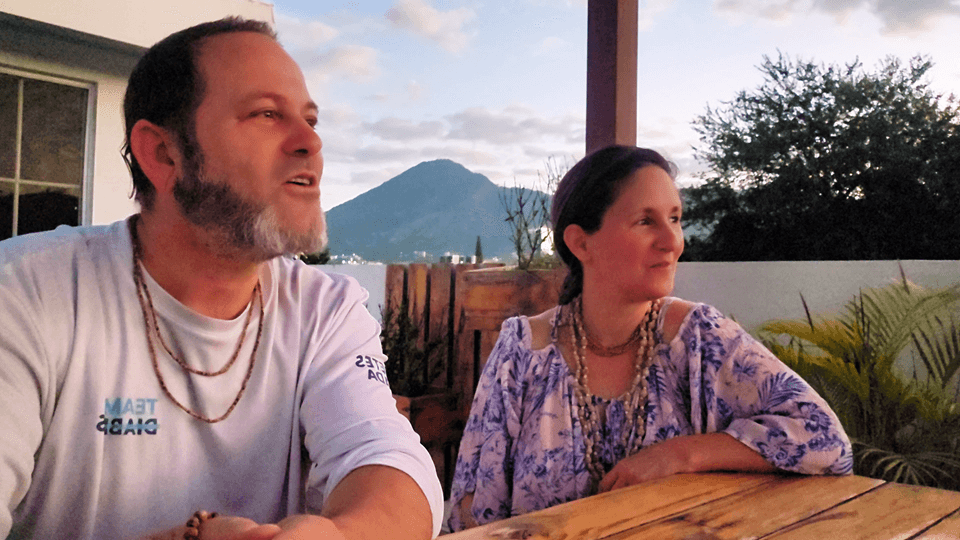
Last Night in San Salvador: Christmas Blessings, Winter Solstice & Chanting With a Sweeter Mood
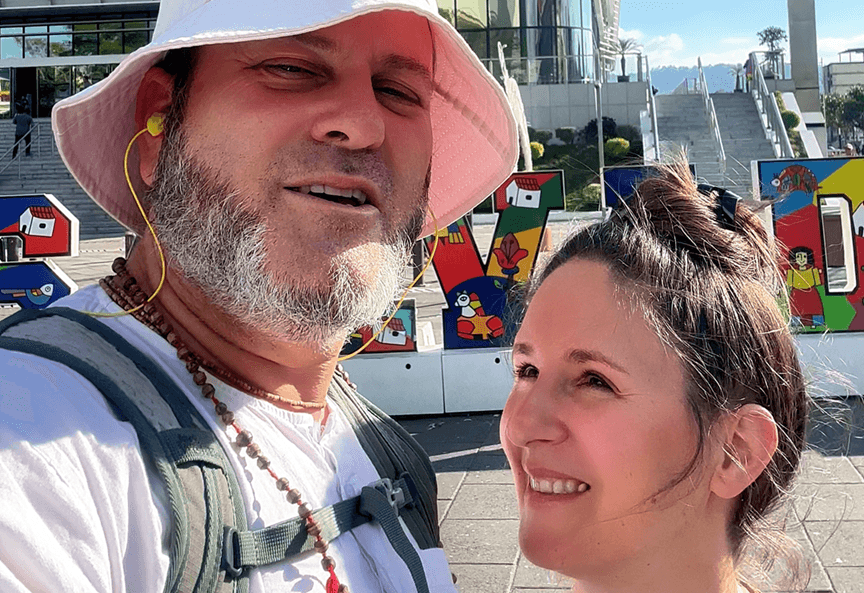
We found El Salvador’s National Library, Then The Cathedral Pulled Us In
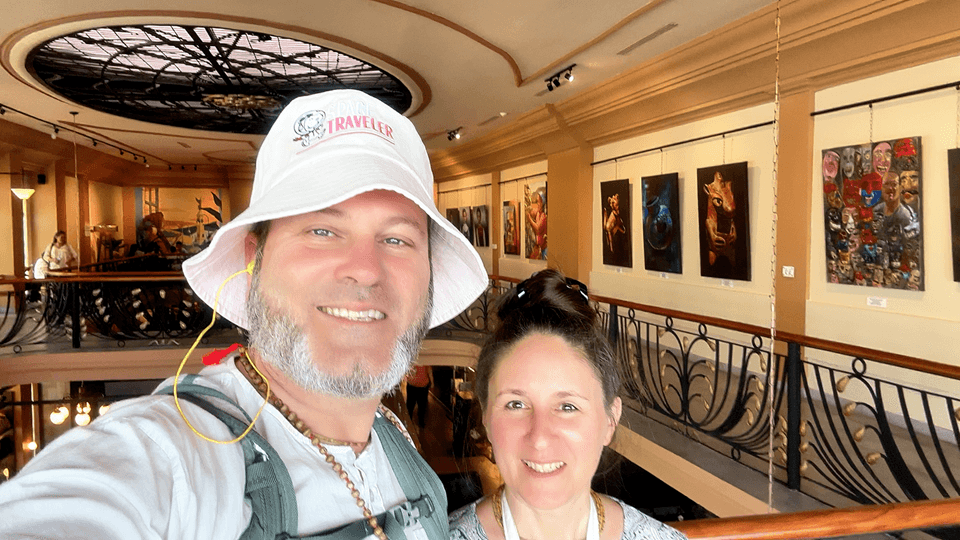
Our Tiny San Salvador Video Turned Into a Whole Blessing (Starbucks Changas and All)
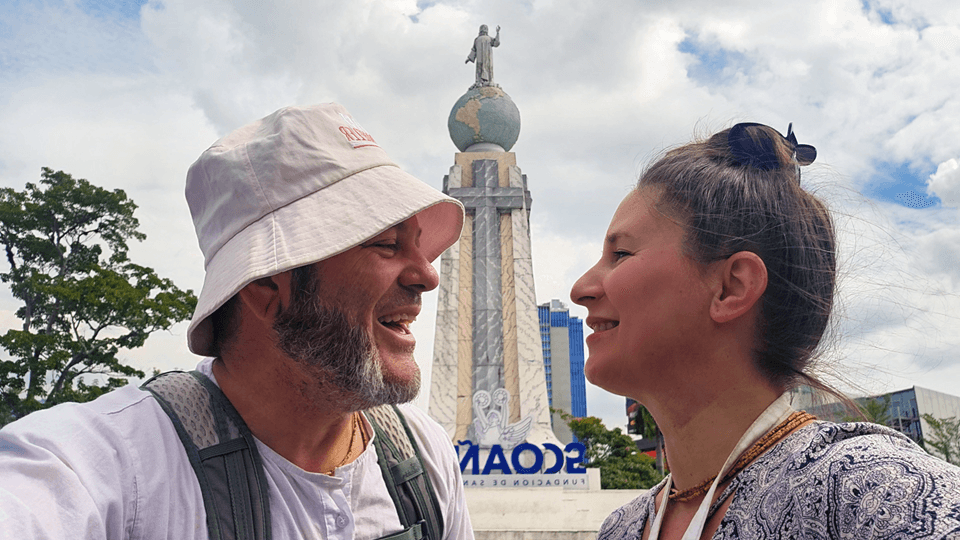
We Saw Christ With His Arms Wide Open, So We Talked About Love (No Labels)

Force Isn’t Faith: Why Real God Talk Stays Gentle
Categories
Share
Recent Posts